Calcium Carbonate Market Price shifts are at the top of the agenda for manufacturing leaders as we move deeper into 2025. If your business relies on producing plastics, paints, paper, or construction materials, you already know a simple truth: the cost and quality of your raw materials dictate your competitive edge in the market. Lately, the global supply chain has been anything but predictable. We have seen fluctuations in energy costs, changing environmental regulations, and shifting freight rates, all of which directly impact the final cost of industrial minerals.
However, Calcium Carbonate Market Price understanding these trends gives you the power to make smarter purchasing decisions. As an industry insider, I want to walk you through exactly what is happening in the global market this year, why prices are shifting, and most importantly, how you can secure premium quality without blowing your production budget.
Calcium Carbonate Market Price: 2025 Global Trends and Strategic Sourcing
Core Drivers Behind Calcium Carbonate Market Price Global Pricing in 2025
Let’s first look at what is actively driving the market right now. The demand for industrial fillers is booming worldwide. Manufacturing industries are actively trying to reduce their reliance on expensive petroleum-based polymers, resins, and pure chemical pigments. By using high-quality natural fillers, manufacturers can lower their overall costs significantly. But this increased global demand naturally puts pressure on the supply chain.
Additionally, energy costs continue to play a massive role. Mining, crushing, and micronizing raw limestone is a heavily energy-intensive process. When global energy prices fluctuate, the cost of processing these minerals usually follows suit. Freight and logistics also remain a major piece of the pricing puzzle. For buyers relying on suppliers from regions with heavy logistical bottlenecks, the landed cost of materials has become a serious financial burden. This is precisely why smart procurement managers are looking for alternative sourcing hubs that offer a better balance of price, quality, and shipping reliability.
The Strategic Shift: Choosing GCC over PCC
When discussing manufacturing costs, we must talk about the difference between Ground Calcium Carbonate (GCC) and Precipitated Calcium Carbonate (PCC). PCC is synthesized chemically, which makes its production highly expensive and time-consuming. Because it relies heavily on chemical processing, its price is highly sensitive to market shocks.
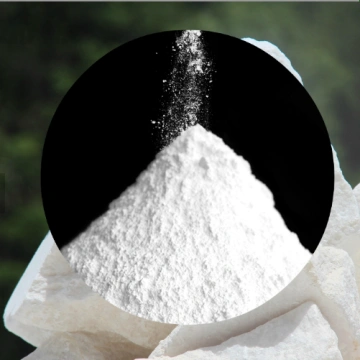
On the other hand, GCC is processed directly from natural limestone. Thanks to advancements in modern milling and micronization technology, high-end GCC can now achieve the extreme fineness and brightness that industries used to only expect from PCC, but at a much more stable and affordable price. For 2025, the trend is clear: manufacturers are heavily migrating toward premium GCC to optimize their formulas, reduce their expenses, and protect their profit margins.
The Geographical Advantage: Why Egypt is the Sourcing Hub of 2025
This brings us to a major shift in global sourcing. Where are companies turning to find the best value this year? The answer is Egypt, and specifically, the Minya region.
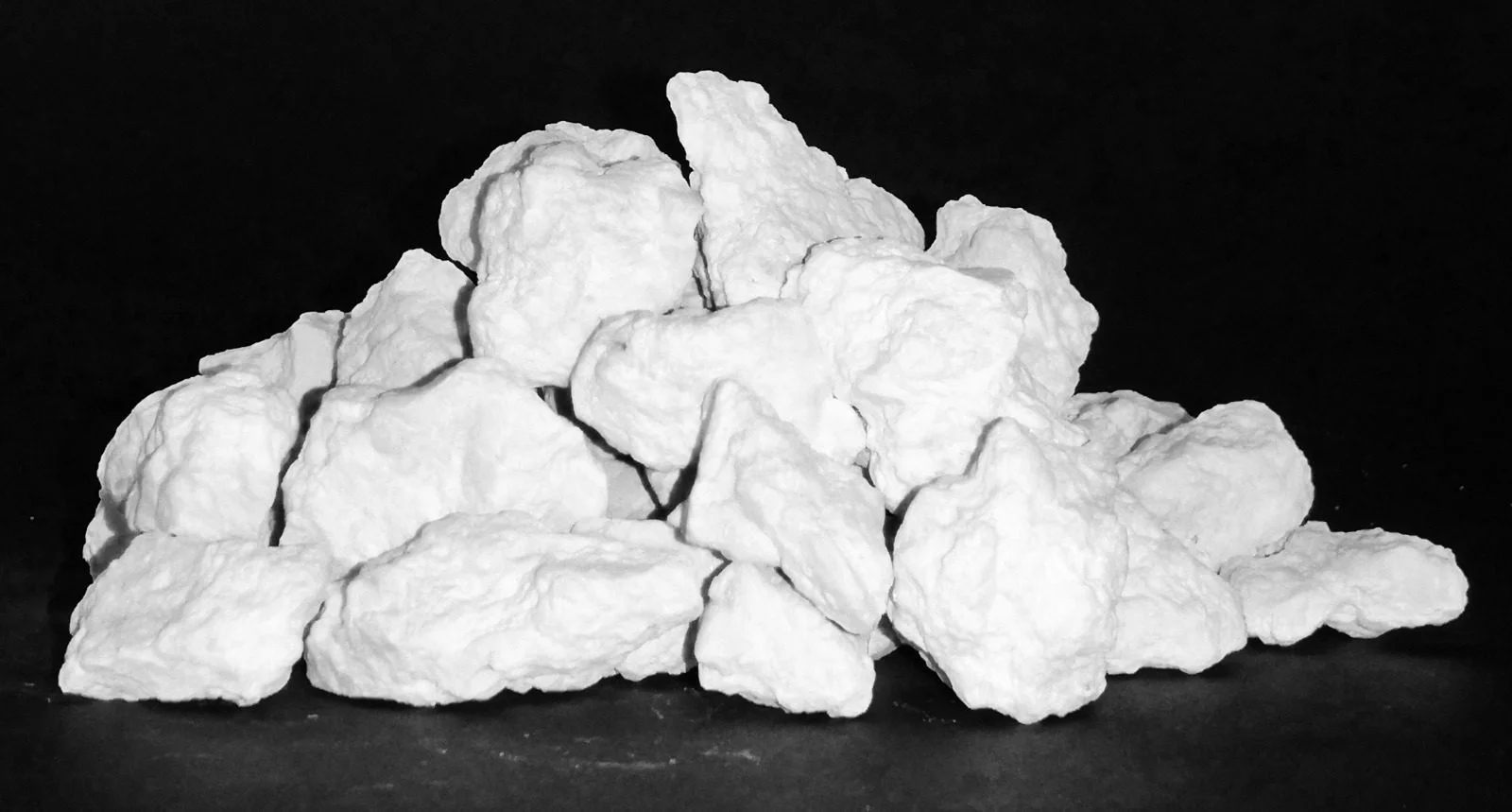
If you work in this industry, you might already know that Minya is home to some of the purest, whitest limestone deposits on the planet. The geological formation here is incredibly unique, yielding a material with exceptionally low impurities and striking natural brightness. Because the raw material is naturally superior, it requires less aggressive processing to reach top-tier industrial standards. This natural advantage keeps production costs highly efficient, which translates directly to a better price point for the end buyer.
Furthermore, Egypt’s strategic geographic location means efficient and direct shipping routes through the Mediterranean and the Red Sea. This cuts down those painful freight costs and transit times for buyers across Europe, Africa, Asia, and the Middle East.
HERBOCAL: Your Direct Partner for Calcium Carbonate Market Price Stability
At HERBOCAL, we see these market challenges every day, and we have built our entire operation to solve them for our clients. We aren’t just another supplier or a trading broker; we are a dedicated manufacturer operating directly out of the world-class Minya region.
By managing the entire supply chain internally—from extracting the raw limestone at our own quarries to advanced micronization, coating, and final export—we eliminate the middlemen completely. This level of total control allows us to offer an incredibly stable and competitive pricing model, even when the global market gets turbulent. We know that consistency is just as important as the price tag. A cheap filler is completely useless to a factory if the particle size varies from batch to batch or if the brightness drops unexpectedly. With us, what you test is exactly what you get, every single time.
Calcium Carbonate Market Price: 2025 Global Trends and Strategic Sourcing
Tailored Calcium Carbonate Solutions and Market Price Considerations for Modern Manufacturing
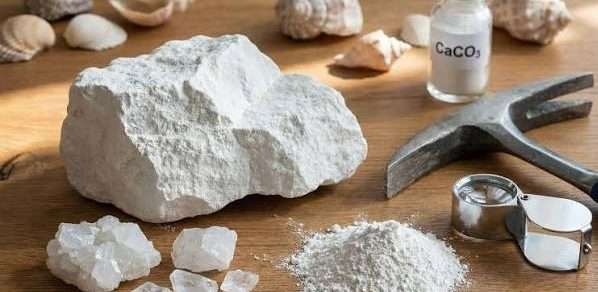
Understanding the Calcium Carbonate Market Price is only one part of making a profitable raw material purchasing decision. For modern manufacturers, the real value comes from matching the right calcium carbonate grade to the application, production process, and required performance.
At HERBOCAL, our modern processing facilities use advanced technology to produce calcium carbonate grades designed for different industrial requirements. Instead of following a “one size fits all” approach, we provide application-focused solutions that help manufacturers evaluate both technical performance and the overall impact of Calcium Carbonate Market Price on their production costs.
Our product range includes:
- Micronized Calcium Carbonate: Available across a broad range of particle sizes, from ultra-fine grades around 0.7 µm to coarser grades, depending on application requirements. Controlled particle size distribution supports consistent dispersion and formulation performance.
- Granulated Calcium Carbonate: Available in granulated forms ranging from approximately 1 mm to over 10 mm for selected industrial applications where controlled handling, feeding, and particle size are required.
- Stearic Acid Coated GCC: Surface-treated calcium carbonate designed for applications such as plastics, PVC, and rubber. Coating can improve filler dispersion and compatibility within suitable polymer matrices, supporting consistent processing, surface quality, and mechanical performance.
When evaluating the Calcium Carbonate Market Price, manufacturers should therefore look beyond the price per ton. Purity, particle size, surface treatment, moisture content, consistency, packaging, logistics, and application performance can all influence the actual cost of using a calcium carbonate grade.
A slightly higher-priced grade may deliver better overall value when it improves processing efficiency, reduces formulation problems, or provides more consistent final-product quality.
How Different Industries Maximize ROI While Managing Calcium Carbonate Market Price
The relationship between Calcium Carbonate Market Price and manufacturing profitability varies significantly from one industry to another.
The most effective purchasing strategy is not simply finding the lowest price. It is selecting a calcium carbonate grade that delivers the required technical performance while maintaining a competitive cost per ton of finished product.
Let’s look at how different industries can maximize their Return on Investment (ROI).
1. Plastics and PVC Industry
Plastic and PVC manufacturers operate under constant pressure to control material costs while maintaining mechanical and processing performance.
Using high-purity, properly treated GCC can allow manufacturers to optimize filler loading in applications such as masterbatch, PVC pipes, profiles, sheets, and other plastic compounds.
Depending on the formulation, calcium carbonate can partially replace polymer resin and contribute to stiffness, dimensional stability, and controlled material costs.
For coated grades, improved dispersion may also support more consistent processing and surface quality.
Therefore, when comparing Calcium Carbonate Market Price, manufacturers should evaluate the complete formulation economics rather than focusing only on the purchase price of the filler. The real metric is how the selected GCC grade affects the overall production cost per ton.
2. Paints and Coatings
In paints and coatings, brightness, whiteness, opacity, coverage, and formulation cost are important considerations.
High-brightness calcium carbonate can function as an extender in suitable paint formulations and may help optimize the use of more expensive pigments and functional ingredients.
Titanium dioxide (TiO₂), for example, represents a significant cost component in many high-performance white coatings. Depending on the formulation and required opacity, calcium carbonate can be used alongside TiO₂ to help optimize pigment economics rather than simply treating the two materials as direct substitutes.
This makes Calcium Carbonate Market Price an important consideration for coating manufacturers seeking to control formulation costs without compromising the required appearance and performance.
The actual savings will depend on the target formulation, pigment loading, product specification, and performance requirements.
3. Paper and Packaging
Paper manufacturers use calcium carbonate for applications where properties such as brightness, opacity, smoothness, printability, and surface quality are important.
Micronized GCC with controlled particle size can support consistent dispersion and help manufacturers achieve the required paper characteristics in suitable formulations.
When monitoring Calcium Carbonate Market Price, paper producers should also consider factors such as particle size distribution, brightness, purity, consistency, transportation costs, and supply reliability.
A consistent grade can provide greater process stability and help reduce variations that may otherwise affect production efficiency and finished paper quality.
4. Construction and Adhesives
Calcium carbonate is widely used in construction-related formulations, adhesives, sealants, fillers, tiles, and other building materials.
In these applications, engineered calcium carbonate can contribute to properties such as viscosity control, bulk, dimensional stability, workability, and mechanical performance, depending on the formulation.
Because construction materials are often produced at high volumes, even a relatively small change in the Calcium Carbonate Market Price can have a meaningful impact on total manufacturing costs.
However, purchasing decisions should not be based on price alone. Particle size, purity, moisture, consistency, handling characteristics, logistics, and compatibility with the formulation can all influence the actual economic value of the material.
For large-scale manufacturers, the best calcium carbonate purchasing strategy is therefore to balance Calcium Carbonate Market Price, technical specifications, supply consistency, and total cost of production.
Calcium Carbonate Market Price: 2025 Global Trends and Strategic Sourcing
Uncompromising Quality and Reliable Logistics
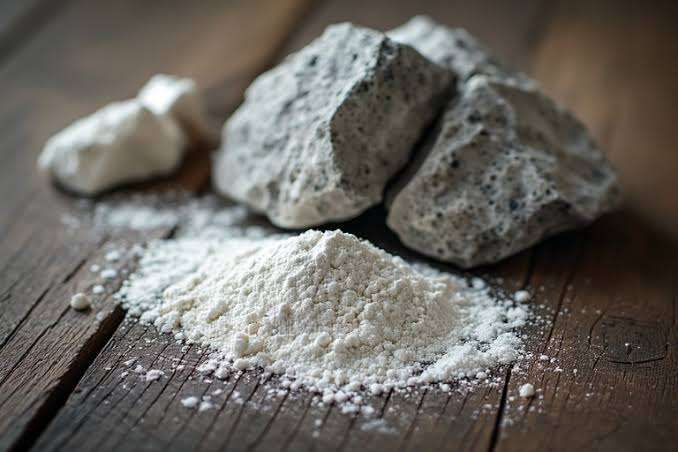
What really sets HERBOCAL apart in this competitive market is our uncompromising commitment to quality control. Every single shipment that leaves our ISO-certified facilities is rigorously tested in our advanced laboratories. We double-check particle size distribution, moisture content, chemical purity, and extreme brightness before anything goes into a shipping bag.
We also believe in complete transparency. We provide our clients with detailed XRF chemical analysis and Material Safety Data Sheets (MSDS), so you know exactly what is going into your production lines.
Because we manage our export logistics efficiently from the Port of Alexandria, you can rely on smooth customs processing and on-time delivery. We know that a delayed shipment means a stopped factory, and we work tirelessly to ensure your supply chain remains uninterrupted.
Calcium Carbonate Market Price: 2025 Global Trends and Strategic Sourcing
Making the Right Choice for Calcium Carbonate Market Price 2025
Calcium Carbonate Market Price Navigating the raw material market in 2025 doesn’t have to be a stressful guessing game. While global prices will always have their natural ebbs and flows, partnering with a primary, reliable manufacturer gives you the stability, quality, and direct pricing you need to thrive and grow.
You don’t have to choose between a good price and good quality. At HERBOCAL Calcium Carbonate Market Price , we proudly deliver both, shipment after shipment. If you are looking to optimize your production costs this year, our expert team is ready to analyze your current technical needs and provide a tailored, highly cost-effective solution that works perfectly for your formulas.