Calcium Carbonate Supplier Audit is an important step for manufacturers that depend on calcium carbonate as part of their production process.
Choosing a supplier based only on price can be risky.
A supplier may offer an attractive quotation, but can it consistently provide the required quality? Does it have enough production capacity? Are its quality-control procedures reliable? Can it handle international shipments? And what happens if your demand increases?
These are the questions procurement and technical teams should answer before committing to a long-term supply relationship.
For GCC manufacturers sourcing calcium carbonate internationally, supplier evaluation becomes even more important because the purchasing process involves production, quality control, export, shipping, documentation, and delivery across borders.
At HERBOCAL, we believe that a good supplier relationship starts with transparency. Buyers should have a clear understanding of the product, the production capabilities, quality standards, and supply process before placing regular orders.
This guide explains how manufacturers can conduct a practical calcium carbonate supplier audit and what they should look for before choosing a supplier.
What Is a Calcium Carbonate Supplier Audit?
A supplier audit is a structured evaluation of a supplier’s ability to consistently meet your company’s requirements.
It does not necessarily mean visiting the supplier’s factory personally.
Depending on the size and importance of the purchase, an audit can include:
- Reviewing technical specifications
- Evaluating quality-control procedures
- Checking production capabilities
- Reviewing certifications and documentation
- Testing product samples
- Assessing packaging
- Reviewing logistics capabilities
- Evaluating communication
- Checking production capacity
- Understanding the supplier’s raw-material sources
The purpose is simple:
To determine whether the supplier can reliably provide the right product at the required quality, quantity, and consistency.

Calcium Carbonate Supplier Audit: How to Evaluate Your Supplier Before You Buy
Why Should You Audit Your Calcium Carbonate Supplier?
Calcium carbonate may look like a straightforward industrial mineral.
But manufacturers can require very specific characteristics depending on how the material is used.
A supplier that works well for one application may not necessarily be the right choice for another.
For example, a buyer may require calcium carbonate for:
- Plastic products
- PVC
- Paints
- Coatings
- Paper
- Rubber
- Adhesives
- Construction materials
- Ceramics
Each application can have different technical requirements.
An effective supplier audit helps you determine whether the supplier understands those requirements and can consistently meet them.
It also helps identify potential problems before they affect production.
1. Start With the Product Specification
The first part of any supplier audit should be the product itself.
Before evaluating the supplier, make sure you have clearly defined what you actually need.
Do not simply ask for:
“Calcium carbonate.”
Instead, define the technical requirements relevant to your application.
Depending on the product and intended use, these may include:
- Calcium carbonate content
- Particle size
- Brightness
- Whiteness
- Moisture
- Coating
- Chemical composition
- Oil absorption
- Dispersion characteristics
The exact parameters depend on the application.
For example, a calcium carbonate grade used in plastics may have different requirements from one used in paints or paper.
Why This Matters
Without a clear specification, it becomes difficult to determine whether the supplier is actually meeting your expectations.
It also makes supplier comparisons less accurate.
Two suppliers may both quote “calcium carbonate,” but the products may not be technically equivalent.
Always compare specifications before comparing prices.
2. Evaluate the Supplier’s Quality-Control System
The next step is to understand how the supplier controls product quality.
A professional supplier should have a defined process for monitoring the material from production through final shipment.
Ask questions such as:
- What properties are tested?
- How frequently are products tested?
- Are production batches monitored?
- What testing equipment is used?
- How are non-conforming batches handled?
- Can the supplier provide quality documentation?
- How are customer specifications recorded?
The objective is not simply to receive a certificate.
You want to understand how the supplier achieves consistency.
HERBOCAL applies quality-control procedures throughout its production process and monitors key characteristics of its calcium carbonate products. The company offers different grades for industrial applications, including Ground Calcium Carbonate and coated calcium carbonate. HERBOCAL
For a manufacturer, this type of quality-control structure is an important part of supplier evaluation.
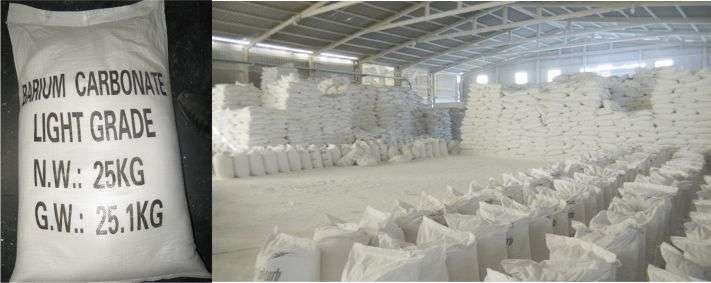
Calcium Carbonate Supplier Audit: How to Evaluate Your Supplier Before You Buy
3. Request and Test Samples
A sample is one of the most useful tools available to a procurement team.
Before placing a large order, request a representative sample and test it according to your own internal requirements.
The testing process may involve:
- Laboratory analysis
- Production trials
- Formulation testing
- Comparison with your current material
- Performance evaluation
This is particularly important when switching from an existing supplier.
The goal is not only to confirm that the product meets the supplier’s specification.
You also want to know:
Does it perform well in our production process?
That is a much more valuable question.
4. Check Batch-to-Batch Consistency
A supplier may provide an excellent first sample.
But what happens six months later?
This is why a proper supplier audit should consider consistency over time.
Manufacturers should monitor incoming shipments and compare test results between batches.
Look for significant changes in:
- Particle size
- Brightness
- Moisture
- Purity
- Coating
- Other application-specific parameters
Consistency is particularly important when calcium carbonate is used continuously in a manufacturing process.
If every shipment behaves differently, production teams may need to keep adjusting their formulations.
A reliable supplier should aim to minimize unnecessary variation.
5. Evaluate Production Capacity
Quality is important.
But quality alone is not enough.
Your supplier also needs to be capable of supplying the required volume.
Ask:
How much can the supplier produce?
What is its current production capacity?
Can capacity increase if demand grows?
What is the typical lead time?
How does the supplier handle large orders?
These questions are especially important for manufacturers planning long-term growth.
A supplier that can comfortably provide 100 tons may not necessarily be equipped to support a customer requiring thousands of tons.
Before establishing a long-term relationship, make sure the supplier’s production capabilities match your future requirements—not just today’s order.
6. Understand Where the Raw Material Comes From
The quality of calcium carbonate begins with its raw material.
For natural calcium carbonate, the characteristics of the limestone source can influence the quality and suitability of the final product.
This makes the location and quality of the raw-material source an important part of supplier evaluation.
HERBOCAL is based in Minya, Egypt, in a region with significant limestone resources used for calcium carbonate production. Its location also provides access to Alexandria Port for international export operations. HERBOCAL official website
When evaluating a supplier, buyers should understand:
- Where does the limestone come from?
- Is the source consistent?
- How is the raw material selected?
- How is it processed?
- How is quality controlled during production?
The closer you look at the complete production chain, the better you can understand the final product.
7. Review Processing and Manufacturing Capabilities
Raw limestone is not the final product.
It must be processed according to the intended application.
Depending on the product, processing can involve stages such as:
Crushing → Grinding → Classification → Processing → Coating, where applicable → Quality Control → Packaging
The supplier should have the appropriate equipment and processes to achieve the required specifications.
Ask about:
- Grinding technology
- Particle-size control
- Classification
- Coating capabilities
- Quality-control systems
- Packaging options
- Production flexibility
This is especially important when you require a specific particle-size distribution or coated calcium carbonate.
8. Evaluate Certifications and Documentation
Documentation is another important part of a supplier audit.
Depending on your industry and market, you may require different documents.
These can include:
- Technical Data Sheets
- Safety Data Sheets
- Certificates of Analysis
- Product specifications
- Quality certificates
- Commercial documents
- Shipping documentation
- Other application-specific documents
The exact requirements depend on the product, destination, and customer’s industry.
The important point is to establish these requirements before the first major shipment.
Clear documentation reduces misunderstandings and makes procurement easier to manage.
9. Assess Export and Logistics Experience
For GCC buyers purchasing from an international supplier, production capability is only one part of the equation.
The supplier also needs to understand international logistics.
Evaluate whether the supplier has experience with:
- Export documentation
- Port operations
- International shipping
- Freight coordination
- Packaging requirements
- Shipping schedules
- Different Incoterms
A supplier may produce an excellent product but still create procurement problems if its export process is poorly organized.
HERBOCAL’s location in Egypt and access to Alexandria Port support its international export activities and connections with global markets. HERBOCAL
For GCC buyers, this experience can be particularly valuable when planning regular shipments.

Calcium Carbonate Supplier Audit: How to Evaluate Your Supplier Before You Buy
10. Understand FOB and CIF Terms
A thorough Calcium Carbonate Supplier Audit should go beyond product quality and manufacturing capabilities. Commercial terms are equally important, especially when sourcing calcium carbonate internationally.
One of the first things to verify is whether the supplier’s quotation is based on:
FOB
or
CIF
Under FOB, the seller’s responsibilities generally extend to loading the goods on board the vessel at the agreed port, while the buyer arranges the main carriage.
Under CIF, the seller arranges the main carriage to the named destination port and provides the required insurance under the applicable Incoterm.
Neither option is automatically better. The important point is understanding exactly what the quoted price includes and which costs remain the buyer’s responsibility.
As part of your Calcium Carbonate Supplier Audit, ask:
- What exactly is included in the quoted price?
- Which port is specified?
- Who arranges the main freight?
- What insurance coverage is included under CIF?
- What destination and handling costs remain with the buyer?
- What is the estimated transit time?
These details help procurement teams calculate the actual landed cost rather than comparing supplier quotations based only on the price per ton.
11. Evaluate Supplier Communication
Communication is an important but often overlooked part of a Calcium Carbonate Supplier Audit.
A supplier may have good equipment and acceptable product specifications, but poor communication can still create serious problems during production, shipment, or quality-control processes.
Pay attention to how the supplier responds during the evaluation stage.
Does the team:
- Answer technical questions clearly?
- Provide requested documents?
- Respond within a reasonable time?
- Explain product specifications properly?
- Communicate openly about limitations?
- Provide realistic production and delivery estimates?
- Notify customers when circumstances change?
These behaviors can provide valuable insight into what the commercial relationship may look like after the purchase order is signed.
If communication is difficult before the first order, managing production schedules, documentation, or shipment issues may become even more challenging later.
For this reason, communication should be treated as a practical part of supplier evaluation—not simply a customer-service issue.
12. Ask How the Supplier Handles Problems
A strong Calcium Carbonate Supplier Audit should examine not only how a supplier performs under normal conditions, but also how it responds when something goes wrong.
No international supply chain is completely free from unexpected problems.
A shipment can be delayed.
A batch may fail to meet an agreed specification.
A packaging issue may occur.
A logistics problem may affect the delivery schedule.
What matters is how professionally the supplier identifies and resolves the problem.
During the audit, ask:
What happens if a batch does not meet the agreed specification?
How are customer complaints investigated?
Who is responsible for quality-related issues?
What corrective actions are available?
How quickly are customers informed when a problem is identified?
A supplier with a defined process for handling non-conformities and customer complaints demonstrates a more structured approach to quality management.
This can significantly reduce procurement risk, particularly for manufacturers that depend on calcium carbonate for continuous production.
13. Check Customer and Market Experience
Experience is another useful factor when conducting a Calcium Carbonate Supplier Audit.
A supplier that has successfully served customers across multiple industries and international markets is likely to have greater experience with different technical specifications, packaging requirements, documentation procedures, and shipping conditions.
HERBOCAL serves international markets across the Middle East, Africa, Europe, Asia, and other regions, supplying calcium carbonate solutions for different industrial applications.
For GCC buyers, this international experience can be valuable when dealing with export documentation, shipping arrangements, product specifications, and destination-specific requirements.
However, experience should not be evaluated on its own.
Procurement teams should consider market experience alongside:
- Current production capabilities
- Product quality
- Quality-control procedures
- Supply consistency
- Export experience
- Customer communication
A supplier with years of experience is valuable only when that experience is supported by reliable current operations.
14. Evaluate the Supplier’s Ability to Grow With You
A Calcium Carbonate Supplier Audit should not focus only on today’s purchasing requirements.
It should also consider the supplier’s ability to support future growth.
Instead of asking only:
“Can you supply us today?”
ask:
“Can you support our requirements as our business grows?”
For example, imagine your company currently requires 500 tons of calcium carbonate per month.
What happens if production doubles?
Can the supplier increase its supply volume?
Can it maintain the same product specifications at higher volumes?
Can it support additional destinations?
Can it manage larger or more frequent shipments?
Can it maintain the same quality-control standards as demand increases?
These questions help procurement teams evaluate scalability before committing to a long-term supply relationship.
A supplier that can grow alongside your business can provide considerably more value than one that can only meet your current requirements.
15. Consider Total Supplier Value
After completing the Calcium Carbonate Supplier Audit, avoid making the final decision based solely on the lowest quotation.
Price is important, but it is only one part of the supplier’s overall value.
A more complete evaluation should consider product quality, consistency, production capacity, logistics, communication, commercial terms, and scalability.
| Evaluation Area | What to Check |
|---|---|
| Product Quality | Does the calcium carbonate meet the required technical specifications? |
| Consistency | Are particle size, purity, brightness, moisture, and other specifications stable between batches? |
| Production | Can the supplier consistently meet the required volume? |
| Raw Materials | Is the raw-material source reliable and consistent? |
| Quality Control | Are testing and quality-control procedures clearly defined? |
| Logistics | Can the supplier efficiently manage international shipments? |
| Documentation | Are technical and commercial documents available and accurate? |
| Communication | Is the supplier responsive, clear, and transparent? |
| Commercial Terms | Are pricing, Incoterms, payment terms, and responsibilities clearly defined? |
| Scalability | Can the supplier increase supply as the customer’s business grows? |
The purpose of a Calcium Carbonate Supplier Audit is not simply to identify the supplier offering the lowest price.
It is to determine which supplier can consistently deliver the right product, at the required quality and volume, with reliable logistics and transparent commercial communication.
That broader evaluation gives industrial buyers a much clearer picture of the supplier’s actual value and long-term suitability.
HERBOCAL: A Supplier You Can Evaluate Beyond Price
At HERBOCAL, calcium carbonate production is supported by a combination of local mineral resources, processing capabilities, quality control, and international export experience.
The company produces different calcium carbonate solutions, including Ground Calcium Carbonate, coated calcium carbonate, micronized grades, and high-brightness products, depending on customer and application requirements. HERBOCAL
Its location in Minya provides access to limestone resources, while its connection to Alexandria Port supports international shipping. HERBOCAL official website
For buyers, this means supplier evaluation can focus on the complete supply chain:
Raw Material → Processing → Quality Control → Packaging → Export → Delivery
That is the level at which a mineral supplier should be evaluated.
Questions to Ask Before Approving a Calcium Carbonate Supplier
Before signing a long-term agreement, GCC procurement teams can use the following checklist:
Product Questions
- What calcium carbonate grades do you offer?
- Which grade is recommended for our application?
- Can you provide technical specifications?
- Can we test samples?
Quality Questions
- How do you control product quality?
- What parameters are tested?
- Can you provide Certificates of Analysis?
- How do you handle non-conforming batches?
Production Questions
- What is your production capacity?
- What is your typical lead time?
- Can you support higher volumes in the future?
Logistics Questions
- Which ports do you use?
- Do you offer FOB and CIF options?
- What documentation do you provide?
- What is the expected shipping schedule?
Commercial Questions
- What is included in the quoted price?
- How long is the quotation valid?
- What are the payment terms?
- Are there minimum order quantities?
Relationship Questions
- Who will manage our account?
- How are complaints handled?
- How are changes communicated?
- Can you support long-term supply planning?
The answers to these questions can reveal far more than a price quotation ever could.
Common Mistakes When Auditing a Calcium Carbonate Supplier
Even experienced procurement teams can overlook important details.
Here are some common mistakes to avoid.
Focusing Only on Price
The cheapest quotation does not necessarily represent the lowest total cost.
Testing Only One Sample
One good sample does not guarantee long-term batch consistency.
Ignoring Production Capacity
A supplier may meet your first order but struggle when your requirements increase.
Not Reviewing Shipping Terms
FOB and CIF quotations should not be compared directly without calculating the relevant additional costs.
Ignoring Communication
Poor communication can turn manageable problems into serious supply disruptions.
Failing to Define Specifications
If the product requirements are unclear, quality disputes become much more likely.
Not Considering Future Demand
A supplier should ideally be evaluated against your expected growth, not only today’s requirements.
How Often Should You Audit Your Supplier?
The frequency of supplier audits depends on the importance and risk level of the material.
For a critical raw material such as calcium carbonate, manufacturers may consider:
- Initial supplier qualification
- Regular performance reviews
- Periodic quality checks
- Re-evaluation after major changes
- Additional review if quality or delivery problems occur
A supplier audit should not be viewed as a one-time event.
Supplier performance should be monitored over time.
Key indicators can include:
- On-time delivery
- Quality consistency
- Complaint rate
- Response time
- Order accuracy
- Documentation accuracy
- Supply reliability
This creates an ongoing supplier-performance system.
Final Thoughts
A calcium carbonate supplier audit is not simply about checking whether a supplier can sell you calcium carbonate.
It is about determining whether that supplier can become a dependable part of your manufacturing supply chain.
The strongest evaluation looks at:
Product Quality
Batch Consistency
Production Capacity
Raw-Material Source
Quality Control
Export Experience
Logistics
Documentation
Communication
Scalability
And, of course, total cost.
At HERBOCAL, we understand that industrial buyers need more than a competitive price.
They need confidence that the material they purchase today can continue to meet their requirements tomorrow.
With its production base in Minya, Egypt, access to limestone resources, international export capabilities, and calcium carbonate solutions for multiple industries, HERBOCAL is positioned to support manufacturers looking for a reliable long-term supply partner. HERBOCAL
If your company is evaluating calcium carbonate suppliers for the GCC or other international markets, HERBOCAL is ready to discuss your technical specifications, required volumes, application, and supply expectations.
Because choosing the right supplier is not about finding someone who can deliver one shipment.
It is about finding a supplier you can trust with the next hundred.
Frequently Asked Questions
What is a calcium carbonate supplier audit?
A calcium carbonate supplier audit is a structured evaluation of a supplier’s product quality, production capacity, quality-control system, logistics, documentation, communication, and ability to meet long-term purchasing requirements.
Why should manufacturers audit calcium carbonate suppliers?
An audit helps manufacturers identify potential quality, supply, logistics, and commercial risks before committing to a supplier.
What should I check when evaluating a calcium carbonate supplier?
You should review product specifications, sample performance, batch consistency, production capacity, quality control, raw-material sources, certifications, export experience, shipping terms, documentation, communication, and scalability.
Is price the most important factor when selecting a calcium carbonate supplier?
No. Price is important, but it should be evaluated alongside product quality, consistency, supply reliability, logistics, technical support, and total landed cost.
Should I test calcium carbonate samples before placing an order?
Yes. Testing samples according to your own production requirements can help determine whether the material is technically suitable for your application.
How can I evaluate calcium carbonate quality?
Depending on the application, buyers may evaluate properties such as particle size, brightness, purity, moisture, coating, chemical composition, and other relevant characteristics.
Does HERBOCAL provide different calcium carbonate grades?
Yes. HERBOCAL offers Ground Calcium Carbonate, coated calcium carbonate, micronized grades, and high-brightness calcium carbonate solutions for different industrial applications. HERBOCAL
Where is HERBOCAL located?
HERBOCAL is based in Minya, Egypt, close to limestone resources used in its calcium carbonate production, with access to Alexandria Port for international export operations. HERBOCAL official website