Bulk Calcium Carbonate purchasing can offer significant advantages for manufacturers across the GCC. But achieving real savings is not simply about ordering a larger quantity.
For companies that regularly use calcium carbonate in plastics, PVC, paints, coatings, paper, rubber, construction materials, adhesives, and other industrial applications, purchasing strategy can have a direct impact on production costs.
A well-planned bulk order can help reduce the average purchasing cost, improve supply stability, simplify procurement, and make inventory planning easier.
However, buying in large quantities also requires careful planning. Storage capacity, delivery schedules, product specifications, cash flow, and future production requirements all need to be considered.
At HERBOCAL, we understand that large-volume buyers are looking for more than a competitive quotation. They need a reliable supply partner capable of supporting their production requirements consistently and efficiently.
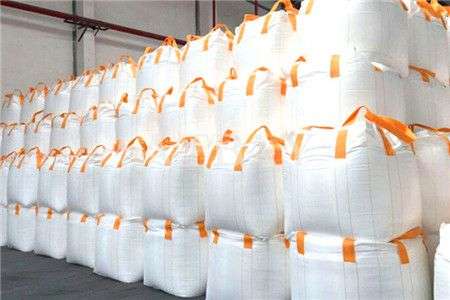
Bulk Calcium Carbonate: How GCC Buyers Can Save on Large Orders
What Does Bulk Purchasing Really Mean?
Bulk purchasing refers to ordering a relatively large quantity of a raw material in a single purchase or through a planned supply agreement.
For calcium carbonate buyers, this can mean purchasing larger quantities according to monthly, quarterly, or annual production requirements rather than placing small orders whenever the material is needed.
The exact volume that makes sense will depend on the customer’s industry, production capacity, storage facilities, and consumption rate.
For one manufacturer, a large order might cover several months of production.
For another, a long-term supply agreement may be a better solution than receiving one very large shipment.
The important point is that bulk purchasing should be planned around actual consumption, not simply around getting a lower price.
Why Larger Orders Can Reduce the Average Cost
One of the main reasons companies consider bulk purchasing is simple economics.
When a supplier processes a larger order, certain administrative, preparation, packaging, and logistics activities can be managed more efficiently.
These efficiencies may allow the supplier to offer more competitive commercial terms for larger volumes.
For the buyer, this can mean a lower average cost per ton compared with placing many small orders.
But the benefit goes beyond the quoted product price.
A well-planned bulk purchasing strategy can potentially reduce the number of purchase orders, shipping arrangements, communication cycles, and receiving operations required throughout the year.
That creates efficiency for both the supplier and the buyer.
Bulk Purchasing Can Improve Supply Security
Price is important.
But for manufacturers, availability is equally important.
A production line cannot always wait for raw materials to arrive.
If calcium carbonate is an important component of the manufacturing process, running out of stock can result in production delays, emergency purchasing, or costly changes to the production schedule.
Maintaining an appropriate supply of calcium carbonate can therefore provide an additional level of protection.
Instead of purchasing only when inventory becomes critically low, manufacturers can plan their orders according to expected consumption.
This creates a more predictable procurement cycle.
HERBOCAL works with international customers to provide calcium carbonate solutions for different industrial applications, helping buyers establish a supply approach that matches their requirements. (herbocal.com)

Bulk Calcium Carbonate: How GCC Buyers Can Save on Large Orders
The GCC Market Makes Procurement Planning Especially Important
Manufacturers across the Gulf Cooperation Council depend on reliable access to industrial raw materials.
Whether a company operates in Saudi Arabia, the UAE, Oman, Qatar, Kuwait, or Bahrain, imported raw materials must move through international supply chains before reaching the production facility.
This means procurement teams need to think beyond the purchase order.
They must consider:
- Expected production volume
- Raw-material consumption
- Shipping schedules
- Storage capacity
- Lead times
- Seasonal demand
- Inventory levels
- Future orders
A bulk purchasing strategy can help connect these elements into one more predictable procurement plan.
Bulk Orders Can Make Shipping More Efficient
Another important advantage of larger orders is logistics efficiency.
As discussed when evaluating shipping costs, the product price is only one part of the total procurement cost.
Freight and logistics can influence the final cost of imported calcium carbonate.
When orders are properly planned, larger shipments may allow logistics costs to be distributed across a greater quantity of material.
This can help reduce the average logistics cost per ton compared with frequent small shipments.
However, larger is not automatically better.
The ideal shipment size depends on factors such as available storage, production consumption, packaging requirements, destination, and transportation arrangements.
The goal is to find the most efficient shipment size for the buyer’s actual operation.
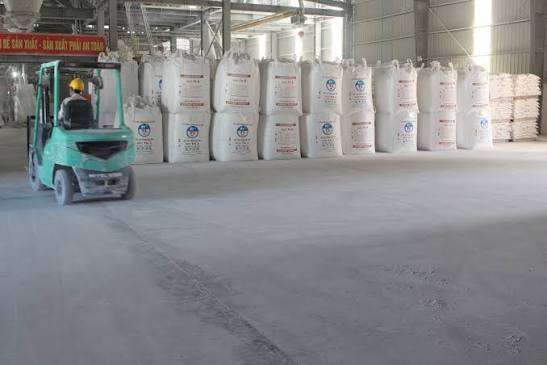
Bulk Calcium Carbonate: How GCC Buyers Can Save on Large Orders
Better Forecasting Leads to Better Purchasing Decisions
One of the most effective ways to benefit from bulk purchasing is accurate demand forecasting.
Before placing a large order, procurement teams should look at historical consumption and future production plans.
For example, a manufacturer can review:
- Average monthly calcium carbonate consumption
- Expected production growth
- Existing inventory
- Seasonal demand
- Planned maintenance periods
- New customer contracts
- Expected changes in production capacity
This information helps determine how much material the company is likely to need.
Without forecasting, a bulk purchase can create a different problem: excess inventory.
The objective is not to buy as much as possible.
The objective is to buy the right quantity at the right time.
Avoiding the Hidden Cost of Emergency Purchases
Emergency purchasing is often more expensive than planned procurement.
When inventory reaches a critically low level, the buyer may have limited options.
There may be fewer available suppliers, less flexibility in shipment schedules, and greater pressure to receive the material quickly.
This can lead to higher purchasing or transportation costs.
By planning bulk orders in advance, manufacturers can reduce their dependence on last-minute purchasing.
This gives procurement teams more time to compare options, coordinate shipping, and communicate technical requirements with the supplier.
For companies with predictable calcium carbonate consumption, this can be a significant operational advantage.
Quality Still Matters When Buying in Bulk
Buying a large quantity of calcium carbonate at a lower price does not make sense if the material does not meet production requirements.
This is especially important when purchasing several months’ worth of raw materials.
A quality issue affecting a small shipment is one thing.
A quality issue affecting a large bulk order can have a much greater impact.
That is why buyers should evaluate the supplier’s quality-control system before committing to a large order.
HERBOCAL applies quality-control processes to its calcium carbonate production, including checks related to important characteristics such as particle size, brightness, purity, and moisture. (herbocal.com)
This consistency is important for manufacturers that need the material to perform reliably throughout their production process.
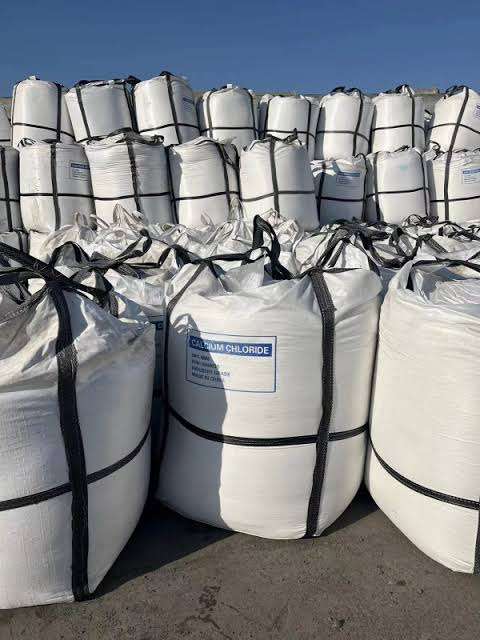
Bulk Calcium Carbonate: How GCC Buyers Can Save on Large Orders
The Right Calcium Carbonate Grade Can Improve Value
Bulk purchasing should not mean purchasing a generic grade simply because it is cheaper.
Different applications require different calcium carbonate characteristics.
For example, manufacturers working with plastics and PVC may have specific requirements related to particle size, dispersion, processing behavior, and final product performance.
Paint and coating manufacturers may place greater emphasis on brightness, opacity, particle size, and surface characteristics.
Paper manufacturers may have different requirements again.
HERBOCAL provides different calcium carbonate solutions, including Ground Calcium Carbonate (GCC), coated calcium carbonate, micronized products, high-brightness grades, and customized solutions for different industrial applications. (herbocal.com)
Choosing the correct grade helps ensure that the buyer is not simply purchasing more material—but purchasing material that is appropriate for the production process.
Bulk Purchasing and Storage: What Buyers Should Consider
There is one important issue that should never be overlooked when ordering calcium carbonate in bulk:
Where will you store it?
Before placing a large order, manufacturers should evaluate their available storage capacity.
The procurement team should consider:
- Warehouse capacity
- Packaging format
- Handling equipment
- Stock rotation
- Environmental conditions
- Average monthly consumption
- Maximum safe inventory level
The ideal bulk order should support production without creating unnecessary pressure on warehouse space or working capital.
This is why procurement and warehouse teams should work together before finalizing a large purchase.
Bulk Calcium Carbonate: How GCC Buyers Can Save on Large Orders
Bulk Buying Can Improve Procurement Efficiency
For manufacturers that consume calcium carbonate on a regular basis, purchasing Bulk Calcium Carbonate can help create a more structured and predictable procurement process.
Consider a manufacturer that requires calcium carbonate every month.
Without a planned purchasing strategy, the procurement team may need to repeatedly:
- Contact suppliers.
- Request and compare quotations.
- Confirm product specifications.
- Place individual orders.
- Arrange transportation.
- Receive and inspect shipments.
- Repeat the process the following month.
Over an entire year, these repeated activities can create significant administrative work and make raw-material planning more complicated.
A structured Bulk Calcium Carbonate purchasing agreement can simplify this process by establishing an expected supply schedule based on forecasted consumption.
Instead of negotiating every shipment separately, the buyer and supplier can agree on key commercial and technical requirements in advance, including:
- Expected annual volume
- Product grade and specifications
- Shipment frequency
- Packaging requirements
- Delivery schedules
- Pricing arrangements
- Quality-control requirements
This can make procurement more predictable while allowing manufacturers to plan inventory and production requirements more effectively.
For companies with stable calcium carbonate consumption, Bulk Calcium Carbonate can therefore be more than a purchasing decision. It can become part of a broader supply-chain strategy designed to improve planning, reduce administrative workload, and maintain production continuity.
Long-Term Supplier Relationships Can Create Additional Value
Purchasing Bulk Calcium Carbonate can also create an opportunity to establish a stronger long-term relationship with the supplier.
When manufacturers provide their supplier with clearer information about expected volumes, production forecasts, preferred specifications, and delivery requirements, both parties can plan more effectively.
The supplier can better prepare production capacity and raw-material requirements, while the buyer can work toward a more predictable supply arrangement.
Over time, this can develop into a strategic commercial relationship rather than a series of unrelated purchase transactions.
For industrial buyers, the value of a long-term Bulk Calcium Carbonate supply relationship can include:
- More predictable supply planning
- Better communication
- Consistent product specifications
- Easier production forecasting
- Improved shipment coordination
- Greater visibility into future requirements
At HERBOCAL, long-term customer relationships are built around reliable supply, consistent quality, technical understanding, and direct communication.
For manufacturers purchasing calcium carbonate regularly, these factors can be just as important as the initial price per metric ton.
Bulk Calcium Carbonate: A Practical Procurement Strategy
For GCC manufacturers, an effective Bulk Calcium Carbonate purchasing strategy can be built around several practical principles.
1. Understand Your Consumption
Start by determining how much calcium carbonate your facility uses on a monthly, quarterly, and annual basis.
Understanding actual consumption provides a stronger foundation for determining appropriate order quantities.
2. Forecast Future Demand
Do not base your Bulk Calcium Carbonate requirements only on historical consumption.
Consider expected production growth, new customers, seasonal demand, product launches, and changes in manufacturing capacity.
Accurate forecasting helps prevent both overstocking and unexpected shortages.
3. Calculate Total Cost
The purchase price per ton is only one component of the overall cost.
Evaluate:
- Product price
- Ocean freight
- Inland transportation
- Packaging
- Handling
- Storage
- Financing costs
- Inventory carrying costs
This provides a more realistic picture of the economic value of a Bulk Calcium Carbonate purchase.
4. Choose the Right Grade
Buying in large quantities only makes sense when the calcium carbonate grade is technically suitable for the application.
Evaluate specifications such as:
- Purity
- Whiteness
- Particle size
- Particle size distribution
- Moisture content
- Surface treatment
- Packaging format
The right Bulk Calcium Carbonate grade should meet the requirements of the final formulation rather than simply being the lowest-priced option.
5. Plan Shipments
Coordinate order quantities and delivery schedules with actual production and inventory requirements.
Depending on consumption and storage capacity, manufacturers may prefer one large shipment, multiple scheduled shipments, or a supply agreement with predetermined delivery windows.
6. Maintain an Appropriate Safety Stock
Maintaining a reasonable safety stock of Bulk Calcium Carbonate can help protect production against unexpected shipping delays, demand increases, or temporary supply disruptions.
The appropriate inventory level will depend on consumption rate, storage capacity, lead time, and the reliability of the supply chain.
7. Work With a Reliable Supplier
A competitive price is valuable only when the supplier can consistently deliver the required grade and quantity.
When selecting a Bulk Calcium Carbonate supplier, manufacturers should evaluate production capacity, quality-control procedures, technical consistency, communication, logistics capabilities, and delivery performance.
Why HERBOCAL Is a Practical Choice for Large-Volume Buyers
HERBOCAL is positioned to support manufacturers looking for reliable Bulk Calcium Carbonate supply from Egypt.
The company operates in Minya, Egypt, close to important limestone resources, with an integrated approach covering raw-material sourcing, processing, grinding, micronization, coating, quality control, and preparation for international markets.
This level of production and supply-chain control can be particularly valuable for customers purchasing calcium carbonate in large and recurring volumes.
Instead of treating calcium carbonate as a simple commodity purchase, manufacturers can work directly with a producer that understands both the technical requirements of GCC and the commercial demands of international procurement.
For buyers sourcing Bulk Calcium Carbonate, direct communication with the producer can also make it easier to discuss application requirements, product specifications, shipment quantities, packaging, and delivery schedules.
HERBOCAL’s experience serving international markets further supports its ability to work with customers that require structured export supply and recurring shipments.
Is Bulk Calcium Carbonate Always the Best Option?
Not necessarily.
Although Bulk Calcium Carbonate can be an efficient purchasing strategy for manufacturers with stable demand, it is not automatically the right solution for every business.
Bulk purchasing tends to work best when the manufacturer has:
- Predictable consumption
- Adequate storage capacity
- Stable production demand
- Sufficient working capital
- Reliable demand forecasts
- A well-planned supply chain
If demand changes significantly, storage space is limited, or working capital is a major consideration, smaller and more frequent shipments may be more appropriate.
This is why the goal should not simply be to encourage customers to purchase larger quantities of Bulk Calcium Carbonate.
The better approach is to understand the manufacturer’s actual consumption, production schedule, storage capabilities, cash-flow considerations, and delivery requirements.
For some businesses, the most efficient solution may be one large annual or quarterly order.
For others, a scheduled series of shipments under a long-term supply agreement may provide a better balance between inventory and supply security.
The right Bulk Calcium Carbonate procurement strategy ultimately depends on the manufacturer’s individual requirements.
The objective is to create a supply model that balances cost, quality, inventory, logistics, and production continuity.
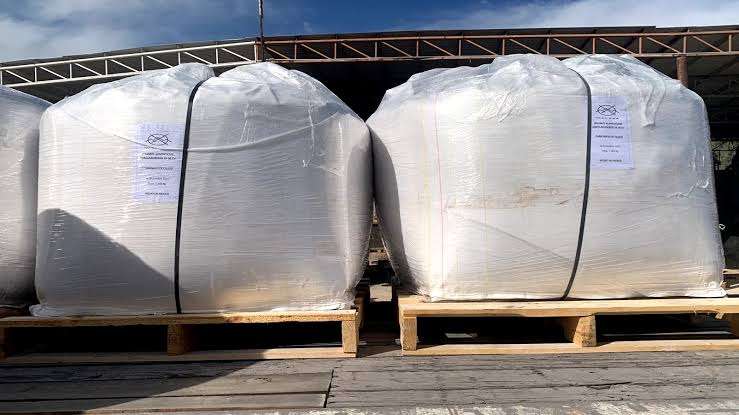
Bulk Calcium Carbonate: How GCC Buyers Can Save on Large Orders
The Real Benefit of Bulk Purchasing
The biggest advantage of bulk purchasing is not simply getting a discount.
It is creating predictability.
Predictable pricing.
Predictable supply.
Predictable inventory.
Predictable logistics.
And, ultimately, a more predictable production process.
For manufacturers in the GCC, this can make a significant difference when calcium carbonate is an important raw material in their products.
By planning purchases around real consumption, choosing the appropriate product grade, optimizing shipment sizes, and working with a reliable supplier, manufacturers can improve both cost control and supply security.
Final Thoughts
Large-volume calcium carbonate purchasing can create meaningful savings—but only when it is approached strategically.
The cheapest price per ton is not necessarily the best deal.
A successful bulk purchasing strategy considers the complete picture:
Product quality + quantity + logistics + storage + delivery + long-term supply = real procurement value.
At HERBOCAL, we understand that every manufacturer has different production requirements.
That is why our approach focuses on providing reliable calcium carbonate solutions while working with customers to understand their specifications, volumes, and supply needs.
Whether you are purchasing calcium carbonate for plastics, PVC, paints, coatings, paper, rubber, construction, adhesives, or another industrial application, the right purchasing strategy can help you control costs without compromising production.
If your company is planning a large calcium carbonate order for the GCC market, contact HERBOCAL to discuss your required grade, volume, packaging, and delivery schedule.
A smarter bulk purchasing strategy today can create a more efficient supply chain tomorrow.
Frequently Asked Questions
What are the main benefits of buying calcium carbonate in bulk?
Bulk purchasing can help manufacturers reduce average purchasing and logistics costs, improve supply availability, reduce the frequency of purchase orders, and create a more predictable procurement schedule.
Is bulk calcium carbonate always cheaper?
Not necessarily. The benefit depends on order volume, logistics, storage, product specifications, and market conditions. The goal should be to calculate the total procurement cost rather than focusing only on the unit price.
How much calcium carbonate should a manufacturer purchase in bulk?
There is no universal quantity. The appropriate volume depends on monthly consumption, production forecasts, storage capacity, working capital, and delivery requirements.
Does HERBOCAL supply calcium carbonate for large industrial orders?
HERBOCAL supplies calcium carbonate for a wide range of industrial applications and works with international customers requiring different product grades and supply volumes. (herbocal.com)
What calcium carbonate products does HERBOCAL offer?
HERBOCAL provides Ground Calcium Carbonate (GCC), coated calcium carbonate, micronized calcium carbonate, high-brightness grades, and customized solutions for different industrial applications. (herbocal.com)
Can GCC manufacturers establish a long-term supply relationship with HERBOCAL?
Yes. HERBOCAL works with international customers and focuses on consistent quality, reliable supply, and long-term business relationships. (herbocal.com)