

Processed Calcium Carbonate is the quiet revolution happening inside the massive industrial zones of the Middle East. From the giga-projects of Saudi Arabia’s Vision 2030 to the rapid expansion of the UAE’s Operation 300bn, and the growth of industrial cities in Oman and Jordan, the region is undergoing a major transformation.
The Middle East is moving away from simply importing finished goods and is now aggressively building its own high-tech manufacturing base.
To supply these modern factories, manufacturers can no longer rely on basic or unrefined raw materials.
From direct experience working with procurement teams across the GCC and the Levant, one thing has become clear: many Middle Eastern manufacturers are now moving away from distant Asian suppliers and inconsistent local stone, and are instead securing long-term partnerships with Egyptian suppliers of premium Processed Calcium Carbonate.
At the center of this shift is HERBOCAL.
In this article, we explore why the Middle East is increasingly sourcing processed calcium carbonate from Egypt—and why processing quality is now a decisive factor for industrial success.

Processed Calcium Carbonate: The Middle East’s Strategic Shift Toward Egyptian Mineral Imports
1) The Difference Between Raw and Processed Calcium Carbonate
A common assumption is that because the Arabian Peninsula has large mineral reserves, it should be able to meet all industrial calcium carbonate needs locally.
In reality, geology is highly specific.
Although limestone is available in many Middle Eastern countries, much of it is:
- Dolomitic (high in magnesium)
- Contaminated with silica
- Affected by iron impurities
For manufacturers producing:
- PVC pipes
- Masterbatch compounds
- Decorative paints
- Industrial coatings
…these impurities create serious technical and economic problems.
Problems with unprocessed or low-quality raw materials include:
- Increased wear on extruder screws and machinery
- Reduced product whiteness
- Poor dispersion in formulations
- Inconsistent product quality
- Higher formulation costs
This is why the market increasingly demands Processed Calcium Carbonate, not just crushed stone.
2) Why Egypt Offers a Better Industrial Solution
At HERBOCAL, raw limestone is sourced from the Minya region in Egypt, a location globally recognized for:
- Exceptional natural whiteness
- High purity
- Low impurity content
- Stable chemical composition
Our calcium carbonate exceeds 99% CaCO₃ purity, making it ideal for high-performance industrial use.
But the real advantage is not only in the quarry—it is in the processing.
From Raw Stone to Engineered Industrial Material
At HERBOCAL, we do not simply crush limestone.
We process it using advanced European micronization and classification technology to produce materials with:
- Controlled Particle Size Distribution (PSD)
- High brightness
- Consistent batch performance
- Better compatibility with industrial formulations
This means manufacturers receive a precisely engineered mineral additive, not just a bulk filler.
3) Fueling the Middle East’s Fastest-Growing Industrial Sectors
The rising demand for processed calcium carbonate is directly linked to the needs of the Middle East’s most important manufacturing sectors.
Processed Calcium Carbonate: The Middle East’s Strategic Shift Toward Egyptian Mineral Imports
4) Processed Calcium Carbonate in the Plastics and Masterbatch Industry
The Middle East is one of the world’s most important petrochemical and plastics manufacturing hubs.
To remain competitive, plastic producers need to improve performance while controlling production costs.
How Processed Calcium Carbonate Supports Plastic Manufacturing
High-quality processed calcium carbonate helps manufacturers achieve:
- Better rigidity and strength
- Improved dimensional stability
- Lower energy consumption
- Faster extrusion speeds
- Better surface finish
Stearic Acid Coated Grades for Better Polymer Performance
At HERBOCAL, we offer Stearic Acid Coated Processed Calcium Carbonate, which is specifically designed for polymer applications.
This coating improves compatibility with plastic resins by making the mineral:
- More hydrophobic
- Easier to disperse
- Less likely to agglomerate
Key benefits for plastic manufacturers include:
- Reduced friction inside the extruder
- Lower machine amperage
- Higher output rates
- Smoother final products
- Less wear on machinery
This makes HERBOCAL’s processed calcium carbonate an important performance enhancer in:
- PVC pipes
- Cable compounds
- Plastic masterbatch
- Packaging materials
- Consumer plastic products
5) Processed Calcium Carbonate in Paint and Coatings
The Middle East’s booming real estate and infrastructure sectors are also driving massive demand for high-quality paints and coatings.
Manufacturers need products that offer:
- Strong opacity
- High brightness
- Smooth finish
- Weather resistance
- Cost efficiency
Why Processed Calcium Carbonate Matters in Paint
Processed calcium carbonate is not just a filler in paint—it is a performance tool.
Key paint benefits include:
- Improved whiteness and brightness
- Better surface smoothness
- Enhanced opacity support
- Improved film durability
- Lower formulation costs
Reducing Titanium Dioxide (TiO₂) Costs
One of the biggest cost pressures in paint manufacturing is Titanium Dioxide (TiO₂).
Because HERBOCAL’s calcium carbonate is naturally bright and precisely processed, it helps paint manufacturers optimize formulations and reduce reliance on expensive imported pigments.
This creates major cost advantages without sacrificing visual or technical performance.

Processed Calcium Carbonate: The Middle East’s Strategic Shift Toward Egyptian Mineral Imports
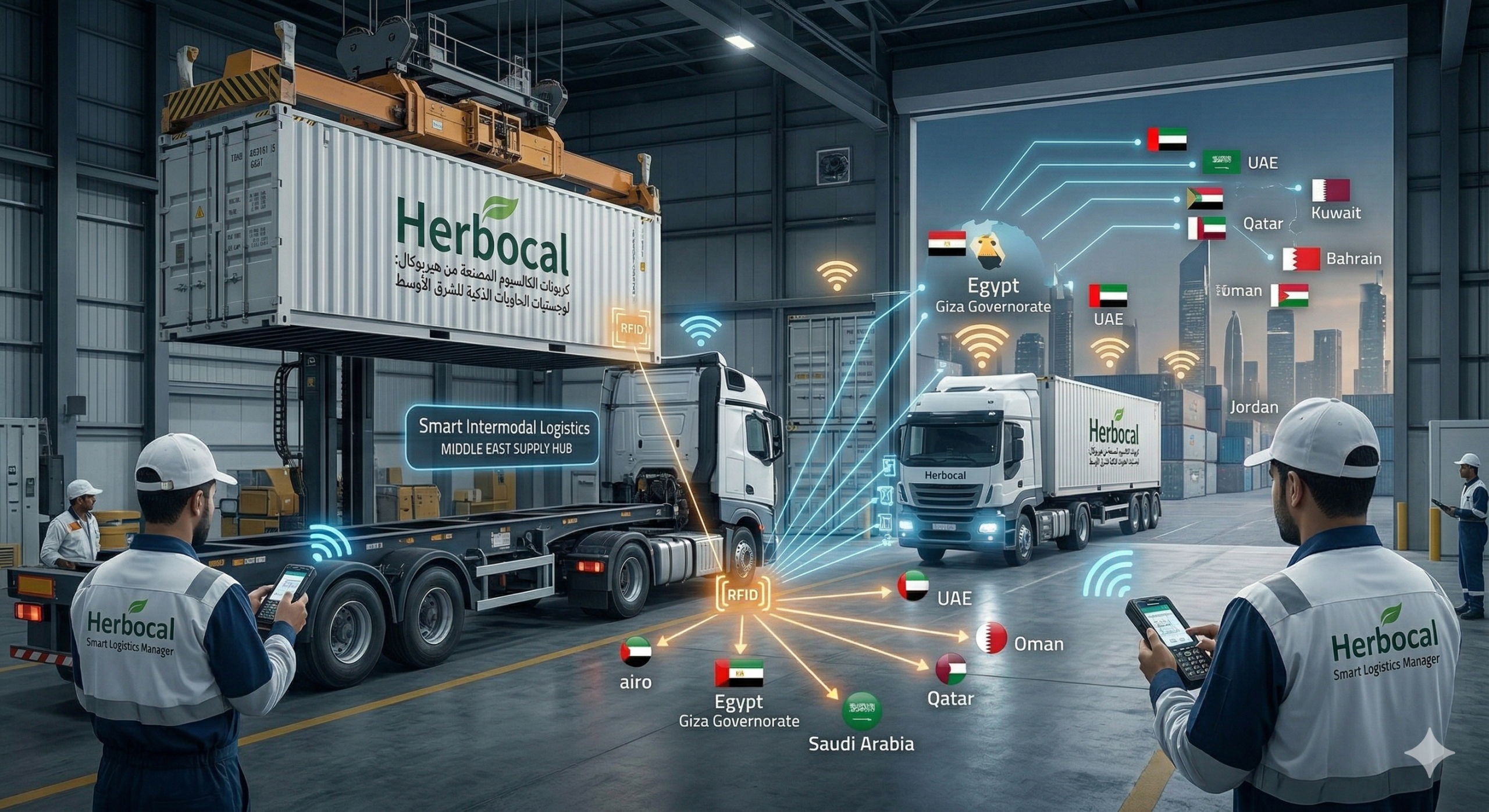
6) The Logistics Advantage: Why Egypt Makes More Sense Than Asia
When comparing suppliers, raw material quality is only part of the equation.
Logistics and supply chain efficiency matter just as much.
Why Asian Supply Chains Are Becoming Less Attractive
Importing from Asia often creates challenges such as:
- Long transit times
- Freight volatility
- Delayed shipments
- Higher working capital requirements
- Inventory storage pressure
Egypt’s Regional Advantage
Egypt is strategically positioned to serve the Middle East quickly and efficiently.
Shipping from Egyptian ports such as:
- Sokhna
- Safaga
- Alexandria
…to destinations like:
- Jeddah
- Aqaba
- Jebel Ali
- Kuwait
- Bahrain
…takes significantly less time than sourcing from distant Asian markets.
Benefits for Middle Eastern manufacturers include:
- Faster delivery
- Lower freight costs
- Shorter lead times
- Better inventory control
- More agile production planning
This enables manufacturers to move closer to a Just-In-Time inventory model, improving both operational efficiency and cash flow.
7) GAFTA Advantage: Lower Customs, Better Landed Cost
Another major reason Middle Eastern manufacturers are sourcing from Egypt is the Greater Arab Free Trade Area (GAFTA).
Because Egypt is a GAFTA member, many manufacturers importing processed calcium carbonate from HERBOCAL may benefit from:
- Reduced customs duties
- Faster regional trade movement
- Lower overall landed cost
This creates a direct pricing advantage over suppliers from:
- China
- India
- Vietnam
- Europe
In highly competitive manufacturing sectors, this cost difference can significantly improve profitability.
8) Supply Chain Security in a Volatile Global Market
Recent years have shown how fragile long-distance supply chains can be.
Manufacturers across the Middle East have faced disruptions caused by:
- Global freight instability
- Container shortages
- Geopolitical tensions
- Delayed export schedules
This is why many companies are shifting toward near-shore sourcing strategies.
Why HERBOCAL Supports Supply Chain Stability
By partnering with HERBOCAL, manufacturers gain access to:
- A reliable regional supply source
- Consistent production capacity
- Faster communication
- Better time-zone alignment
- Lower supply risk
This allows factories to reduce dependence on uncertain overseas routes and build a more secure industrial supply chain.
9) Why HERBOCAL Is Becoming a Preferred Industrial Partner
At HERBOCAL, we understand that industrial buyers are not simply purchasing powder—they are investing in production reliability.
What manufacturers value most from HERBOCAL:
- High-purity calcium carbonate
- Consistent particle size distribution
- High brightness and whiteness
- Coated and uncoated grades
- Reliable export operations
- Technical support for industrial applications
We work closely with clients across the Middle East to help them select the right grade for their production requirements, whether in:
- Plastics
- Paints
- Coatings
- Construction materials
- Masterbatch applications
Conclusion
Processed Calcium Carbonate is becoming a strategic raw material for the Middle East’s industrial future.
As the region expands its manufacturing capabilities, factories need more than basic minerals—they need engineered, high-performance materials that support quality, efficiency, and cost control.
With its geological advantages, strategic location, and advanced processing capabilities, Egypt has become a natural supply hub for the region.
And with HERBOCAL, manufacturers gain access to premium processed calcium carbonate backed by consistency, technical reliability, and export strength.
If your factory is looking to improve product quality, reduce production costs, and secure a more reliable raw material supply, HERBOCAL is ready to support your next stage of growth.
