
Calcium Carbonate Price is one of the first things industrial buyers consider when sourcing Ground Calcium Carbonate (GCC). But if you are comparing suppliers from Egypt and India, looking only at the quoted price per ton can lead to the wrong decision.
For manufacturers in paints, plastics, PVC, rubber, paper, adhesives, construction chemicals, and other industries, the real question is not simply, “Which country offers the cheaper calcium carbonate?”
The better question is:
Which source gives you the best combination of price, quality, consistency, logistics, and long-term value?
Egypt and India are both important players in the industrial minerals market. Each has established production capabilities and access to different raw material resources. However, the differences in geology, processing, logistics, and export costs can make Egyptian GCC particularly attractive to manufacturers looking for reliable international supply.
At HERBOCAL, we believe that a good purchasing decision should be based on the complete value of the material—not just the number written on a quotation.
Calcium Carbonate Price: Egypt vs India – Comparing GCC Prices and Quality
Why Calcium Carbonate Price Is Not the Whole Story
When comparing GCC suppliers, it is easy to focus on the price per metric ton.
However, the lowest quoted price does not always mean the lowest manufacturing cost.
A calcium carbonate product with inconsistent particle size, lower brightness, higher moisture, or greater impurity levels may force a manufacturer to compensate elsewhere in the formulation.
This can mean:
- Higher consumption of other raw materials
- More processing adjustments
- Increased production waste
- More frequent quality problems
- Inconsistent final product appearance
- Higher maintenance or processing costs
For this reason, professional procurement teams normally evaluate total cost of ownership, rather than purchasing price alone.
A slightly higher-quality GCC can sometimes produce greater savings because it performs better and more consistently in the final formulation.
Egypt vs India: Where Does the Price Difference Come From?
The price of calcium carbonate is influenced by much more than the cost of mining limestone.
Several factors contribute to the final export price, including:
- Raw material availability
- Limestone purity
- Mining and processing costs
- Energy consumption
- Micronization requirements
- Coating treatment
- Packaging
- Order volume
- Inland transportation
- Ocean freight
- Port and customs costs
This is why two suppliers offering “calcium carbonate” may quote very different prices.
India has a large domestic industrial base and a well-established minerals and chemicals sector. This gives Indian manufacturers access to a broad local supply network.
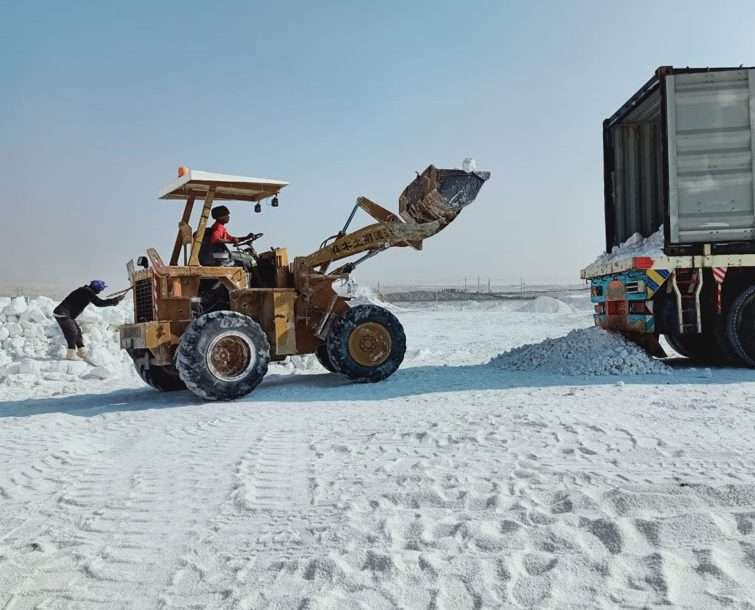
Egypt, on the other hand, has a major natural advantage: its extensive high-purity limestone reserves, particularly in the Minya region. HERBOCAL operates close to these resources, allowing the company to control the material from the quarry through processing and final supply.
Calcium Carbonate Price: Egypt vs India – Comparing GCC Prices and Quality
The Egyptian Limestone Advantage
One of the strongest arguments for sourcing GCC from Egypt is the quality of the natural limestone.
Minya is well known for limestone deposits characterized by high calcium carbonate content, strong natural brightness, and relatively low impurity levels.
This matters because the quality of the original stone directly affects the quality of the final calcium carbonate powder.
At HERBOCAL, we start with carefully selected Egyptian limestone and process it into grades designed for different industrial applications.
Depending on the customer’s requirements, GCC can be supplied with controlled particle sizes, high brightness, and either coated or uncoated surfaces.
The company offers micronized GCC, coated calcium carbonate, high-brightness grades, and customized solutions for different manufacturing applications.
Comparing GCC Quality: Egypt vs India
It would be inaccurate to say that every Egyptian GCC product is better than every Indian product—or the opposite.
The reality is more practical.
Quality depends on the individual deposit, processing technology, quality-control system, and technical specifications of the supplier.
When comparing Egyptian and Indian GCC, buyers should examine the actual technical data rather than relying on country of origin alone.
Important parameters include:
1. Calcium Carbonate Purity
Higher CaCO₃ content can be important for applications where mineral purity affects formulation performance.
2. Whiteness and Brightness
For paints, paper, plastics, coatings, and other appearance-sensitive applications, brightness can have a direct effect on the final product.
3. Particle Size Distribution
Particle size affects dispersion, surface finish, processing behavior, and formulation efficiency.
A supplier should be able to provide a clear specification for the required micron size and particle distribution.
4. Moisture Content
Excess moisture can create handling and processing problems, particularly in applications requiring controlled material conditions.
5. Oil Absorption
Oil absorption is particularly important in applications such as paints, coatings, and plastics because it can influence formulation requirements and processing behavior.
6. Coating Quality
For plastics, rubber, and other polymer-based applications, coated calcium carbonate can provide improved compatibility and dispersion.
This is why buyers should compare technical specifications alongside price.
Calcium Carbonate Price: Egypt vs India – Comparing GCC Prices and QualityCalcium Carbonate Price: Egypt vs India – Comparing GCC Prices and Quality
What Makes HERBOCAL Different?
At HERBOCAL, quality control begins before the limestone reaches the production line.
The company follows an integrated approach that connects raw material extraction, processing, micronization, quality control, and export preparation.
This level of control helps HERBOCAL maintain greater consistency between batches.
For international manufacturers, consistency is not a minor detail.
Imagine running a large PVC or masterbatch production line and receiving one shipment with excellent dispersion, followed by another with noticeable differences in particle size.
Even if the second shipment is cheaper, the savings can disappear through formulation adjustments, rejected batches, downtime, or inconsistent final products.
That is why HERBOCAL focuses on providing GCC that manufacturers can use with confidence from one shipment to the next.
Logistics: Another Important Part of the Final Price
When comparing Egypt and India, transportation should also be included in the calculation.
For an international buyer, the purchase price is only one component of the final landed cost.
Shipping distance, freight rates, port handling, container availability, documentation, and delivery time can all influence the final cost.
Egypt has a particularly strategic geographical position between Europe, Africa, Asia, and the Middle East.
Its proximity to the Suez Canal and access to major maritime routes provide an important advantage for international mineral exports.
For buyers in the Middle East, Africa, and parts of Asia, Egyptian suppliers can therefore offer an attractive combination of competitive production costs and efficient international logistics.
HERBOCAL has already positioned its export operations to serve customers beyond the Egyptian market, with calcium carbonate solutions supplied to multiple international regions.
Why Egyptian GCC Can Offer Better Overall Value
The strongest argument for Egyptian GCC is not simply that it may have a lower quoted price.
It is the combination of several advantages:
High-quality limestone + competitive production + controlled processing + consistent specifications + strategic logistics.
This combination can make a significant difference for manufacturers purchasing large volumes.
For example, a manufacturer may initially compare two quotations and find only a small difference in price per ton. But after considering material efficiency, formulation performance, production stability, freight, and quality losses, the more consistent product may become the more economical option.
This is where a professional supplier makes a real difference.
What Should Buyers Ask Before Choosing a GCC Supplier?
Before making a purchasing decision, we recommend asking every supplier for clear answers to the following questions:
- What is the CaCO₃ purity?
- What is the brightness or whiteness level?
- What particle sizes are available?
- Is the material coated or uncoated?
- What is the moisture content?
- What is the oil absorption?
- Can the supplier provide a Certificate of Analysis (COA)?
- Can the supplier provide a Technical Data Sheet (TDS)?
- Can the supplier provide samples for testing?
- What are the packaging and shipping options?
- What is the minimum order quantity?
- Can the supplier customize the product according to the application?
These questions help turn a simple price comparison into a professional sourcing evaluation.
Egypt or India: Which Is Better for Your Business?
There is no single answer for every manufacturer.
Indian suppliers can be an excellent choice for companies that prioritize local sourcing, short domestic transportation, or established regional supply relationships.
Egyptian suppliers, however, can be highly competitive for international buyers looking for high-purity limestone-based GCC, especially when quality, export logistics, and long-term supply value are considered together.
For manufacturers outside Egypt, the best choice should ultimately be based on the landed cost and technical performance, not simply the factory quotation.
Why Choose HERBOCAL for Your GCC Requirements?
At HERBOCAL, we understand that industrial buyers are not simply purchasing a white powder.
They are purchasing a raw material that becomes part of their production process—and ultimately part of the product they sell to their customers.
That is why our approach goes beyond supplying calcium carbonate.
HERBOCAL provides:
- High-purity Egyptian calcium carbonate
- Ground Calcium Carbonate (GCC)
- Coated and uncoated grades
- Controlled particle sizes
- High-brightness grades
- Application-focused solutions
- Export-ready supply
- Technical support for industrial buyers
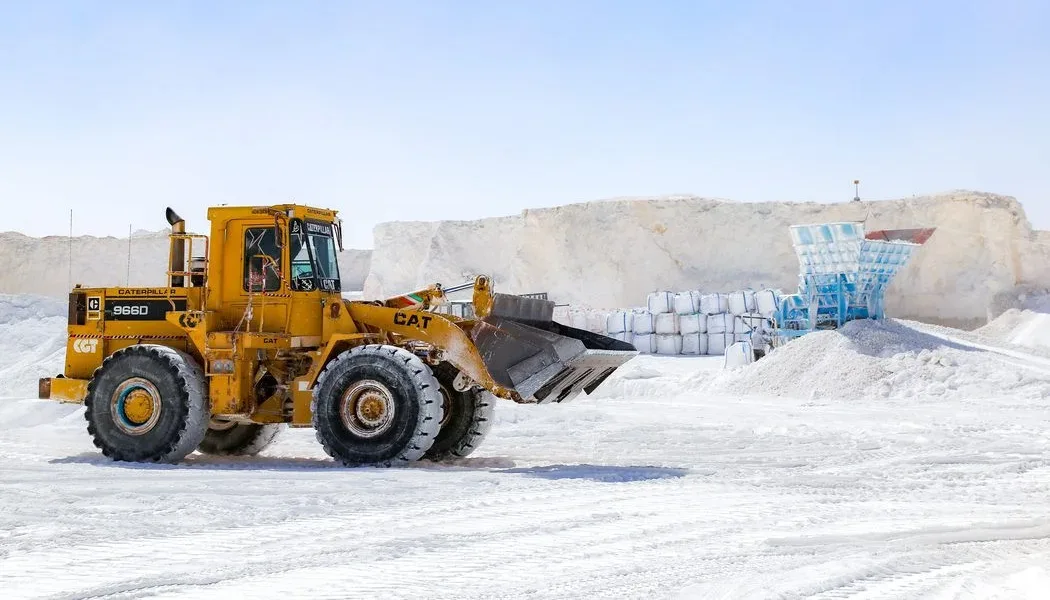
Our location in Minya gives us direct access to high-quality Egyptian limestone resources, while our processing and quality-control capabilities allow us to convert this natural resource into industrial GCC suitable for demanding applications.
Calcium Carbonate Price: Egypt vs India – Comparing GCC Prices and Quality
Final Thoughts: Look Beyond the Quotation
When comparing Calcium Carbonate Price between Egypt and India, the cheapest quotation is not automatically the best deal.
A better purchasing decision considers the entire picture:
Raw material quality → Processing → Technical specifications → Consistency → Logistics → Landed cost → Production performance.
Egypt has a strong natural advantage through its high-quality limestone resources, while HERBOCAL combines this geological advantage with controlled processing and export capabilities.
For manufacturers looking for a dependable GCC partner, the goal should be simple: obtain the right quality at a competitive total cost—and receive the same reliable performance shipment after shipment.
If you are currently comparing calcium carbonate suppliers from Egypt and India, HERBOCAL can help you evaluate the right GCC grade for your application and provide the technical specifications, samples, and commercial information needed to make an informed sourcing decision.
Looking for high-quality GCC from Egypt? Contact HERBOCAL and discuss your required specifications, application, quantity, and destination with our team.
