CIF vs FOB Pricing is an important topic for any company importing calcium carbonate into GCC markets.
When a manufacturer receives two quotations from international suppliers, the first instinct is often to compare the price per ton.
But what if one supplier quotes a FOB price while another offers a CIF price?
Does the lower number actually mean the supplier is cheaper?
Not necessarily.
The difference between CIF and FOB affects what is included in the quoted price, who arranges transportation, where responsibility changes from seller to buyer, and how the buyer should calculate the final procurement cost.
For companies purchasing calcium carbonate in large quantities, understanding these terms can prevent misunderstandings and make supplier comparisons much more accurate.
At HERBOCAL, we believe that international buyers should understand exactly what they are paying for—not simply compare numbers on different quotations.
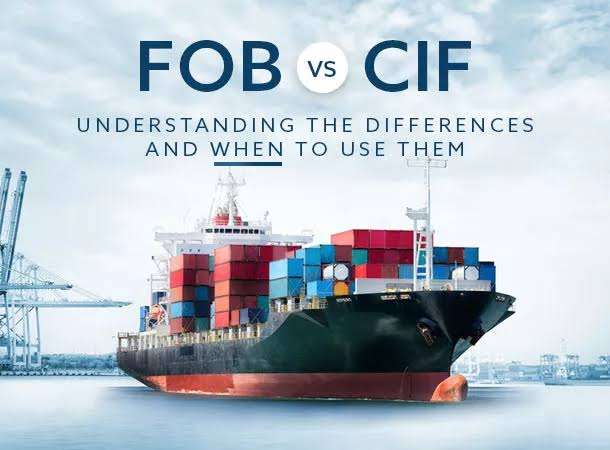
CIF vs FOB Pricing: What GCC Buyers Need to Know When Purchasing Calcium Carbonate
Understanding CIF vs FOB Pricing
When importing industrial raw materials such as calcium carbonate, buyers frequently encounter two important international trade terms: FOB and CIF.
Understanding CIF vs FOB Pricing is essential because the two quotations may look similar on paper while representing very different cost structures and responsibilities.
FOB and CIF are international commercial terms, commonly known as Incoterms, used to define specific obligations between sellers and buyers during international trade.
They help clarify important questions such as:
- Who arranges the main transportation?
- Who pays for ocean freight?
- Who handles export procedures?
- When does the risk transfer from seller to buyer?
- Who arranges insurance?
- Which costs are included in the supplier’s quotation?
For international calcium carbonate procurement, understanding CIF vs FOB Pricing can help buyers avoid inaccurate price comparisons and calculate their actual import costs more effectively.
Let’s examine each option separately.
What Does FOB Mean?
FOB stands for Free On Board.
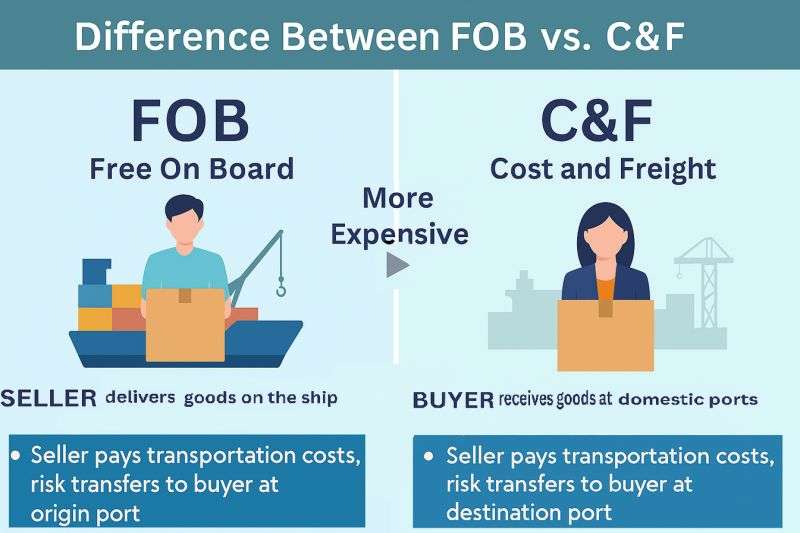
Under FOB terms, the seller is responsible for preparing the goods for export and loading them on board the vessel nominated for shipment at the agreed port of shipment.
Once the goods are loaded on board the vessel, the risk transfers to the buyer.
After this point, the buyer is generally responsible for arranging the main transportation and managing the costs that arise under the agreed commercial arrangement.
For a GCC manufacturer purchasing calcium carbonate from Egypt, an FOB quotation might look like:
Calcium Carbonate – FOB Alexandria Port – $X per Metric Ton
The buyer would then arrange the ocean freight from Alexandria to the destination port.
This means that FOB pricing gives the buyer greater control over the shipping process.
However, it also requires the buyer to understand freight markets, coordinate logistics providers, and manage the transportation arrangements after the goods are loaded.
What Does CIF Mean?
CIF stands for Cost, Insurance and Freight.
Under CIF terms, the seller arranges and pays for the main carriage required to transport the goods to the named destination port.
The seller also obtains the insurance coverage required under the CIF rule.
For example, a calcium carbonate supplier might provide the following quotation:
Calcium Carbonate – CIF Jeddah – $Y per Metric Ton
In this arrangement, the quoted price includes the product, the main ocean freight to Jeddah, and the required insurance coverage.
However, there is an important point that buyers must understand when evaluating CIF vs FOB Pricing:
CIF does not mean that every cost between the supplier’s factory and the buyer’s warehouse is included.
Depending on the transaction and destination country, the buyer may still be responsible for costs such as:
- Import customs clearance
- Import duties and taxes
- Destination port charges
- Terminal handling charges
- Inspection requirements
- Inland transportation
- Storage or demurrage charges where applicable
Therefore, a CIF quotation should not automatically be considered a complete “door-to-door” price.
CIF vs FOB Pricing: The Main Difference
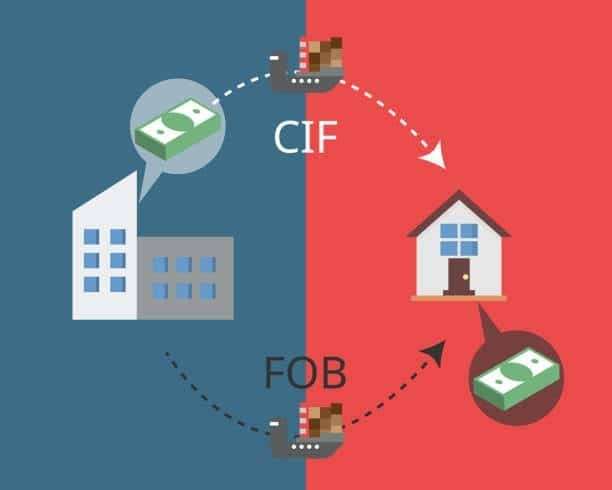
The primary difference between CIF and FOB relates to transportation arrangements and the costs included in the supplier’s quotation.
FOB Pricing
Under FOB:
- The seller handles export procedures.
- The seller delivers and loads the goods on board the vessel at the agreed port.
- Risk transfers once the goods are on board.
- The buyer arranges the main ocean freight.
- The buyer manages transportation beyond the agreed port of shipment.
CIF Pricing
Under CIF:
- The seller handles export procedures.
- The seller arranges the main carriage to the named destination port.
- The seller pays for the agreed freight.
- The seller obtains the required insurance coverage.
- Risk transfers according to the CIF rule once the goods are loaded on board at the port of shipment, despite the seller arranging and paying for carriage to the destination port.
This final point is particularly important.
Many buyers assume that because the supplier pays for freight under CIF, the supplier also carries all transportation risk until the cargo arrives at the destination.
That is not necessarily how the Incoterm allocates risk.
For this reason, procurement teams should understand the commercial and risk implications of CIF vs FOB Pricing, not simply compare the freight costs.
Why CIF vs FOB Pricing Matters for GCC Calcium Carbonate Buyers
Imagine that a GCC manufacturer receives two quotations for the same grade of calcium carbonate.
Supplier A
FOB Alexandria: $X per Metric Ton
Supplier B
CIF Jeddah: $Y per Metric Ton
At first glance, Supplier A may appear cheaper.
However, the comparison is incomplete.
The FOB price does not include the main ocean freight that the buyer will need to arrange separately.
The CIF quotation already includes the supplier’s contracted freight to the named destination port, as well as the required insurance under the CIF arrangement.
To make an accurate procurement decision, the buyer should calculate the estimated total landed cost.
This means adding the relevant logistics costs to the FOB quotation before comparing it with the CIF alternative.
A meaningful CIF vs FOB Pricing comparison should therefore consider:
- Product price
- Ocean freight
- Insurance
- Port charges
- Documentation costs
- Customs clearance
- Import duties where applicable
- Inland transportation
- Handling costs
The cheapest quotation per metric ton is not always the lowest-cost purchasing option.
FOB Can Give Buyers More Control
FOB can be particularly attractive for large companies with established international procurement and logistics capabilities.
A major manufacturer may already have relationships with:
- Shipping lines
- Freight forwarders
- Customs brokers
- Logistics companies
The company may also have negotiated freight rates based on its total annual import volume.
In these circumstances, FOB purchasing can provide significant flexibility.
The buyer may be able to:
- Select a preferred shipping line.
- Negotiate its own freight rates.
- Choose a preferred freight forwarder.
- Coordinate multiple international suppliers.
- Consolidate shipments when commercially practical.
- Control shipping schedules.
- Align deliveries with production requirements.
For experienced procurement teams, FOB can become part of a wider logistics strategy.
However, the additional control also means additional responsibility.
The buyer needs the capability to manage international transportation efficiently.
CIF Can Make Procurement Simpler
CIF can be a practical option for buyers that prefer the supplier to arrange the main international transportation.
Instead of separately negotiating with shipping companies or freight forwarders, the buyer receives a quotation that includes the main carriage to the agreed destination port.
This can simplify the purchasing process.
CIF may be particularly attractive for companies that:
- Have limited international shipping experience.
- Do not maintain their own freight contracts.
- Prefer supplier-managed logistics.
- Want fewer parties involved in the transaction.
- Purchase smaller or less frequent volumes.
- Want to simplify procurement administration.
For these buyers, CIF can reduce some of the operational complexity associated with international sourcing.
However, buyers should still review destination charges and local import requirements carefully before making a purchasing decision.
Is CIF More Expensive Than FOB?
Not necessarily.
This is one of the most common misunderstandings when comparing CIF vs FOB Pricing.
A CIF quotation may appear higher because the price includes ocean freight and insurance.
That does not automatically mean the supplier is charging more for the calcium carbonate itself.
Likewise, a FOB quotation may appear significantly cheaper because the main transportation cost is not included.
The only meaningful comparison is to calculate both options on a comparable cost basis.
FOB Total Cost
FOB Product Price
Buyer-Arranged Ocean Freight
Insurance Where Required
Relevant Destination and Import Costs
CIF Total Cost
CIF Product Price
Relevant Destination and Import Costs Not Included Under CIF
Once both quotations are converted into comparable total procurement costs, the buyer can make a more informed commercial decision.
How Should Industrial Buyers Choose Between CIF and FOB?
There is no single answer that works for every calcium carbonate importer.
The right choice depends on several factors.
FOB may be more suitable when the buyer:
- Imports large volumes regularly.
- Has an experienced logistics department.
- Maintains relationships with freight providers.
- Can negotiate competitive freight rates.
- Wants greater control over shipping schedules.
CIF may be more suitable when the buyer:
- Prefers a simpler purchasing process.
- Does not have dedicated freight arrangements.
- Wants the supplier to coordinate the main carriage.
- Imports smaller or less frequent shipments.
- Prefers a more consolidated quotation.
When evaluating CIF vs FOB Pricing, the decision should ultimately be based on total cost, internal logistics capabilities, shipment volume, supply-chain requirements, and risk management.
The Right Way to Compare International Calcium Carbonate Quotations
When sourcing calcium carbonate internationally, procurement teams should avoid comparing quotations based solely on the headline price.
Instead, request clear commercial information from every supplier.
Ask:
- Which Incoterm is being used?
- Which port is named in the quotation?
- What exactly is included in the price?
- Who arranges ocean freight?
- Who obtains insurance?
- Which costs remain the buyer’s responsibility?
- What destination charges may apply?
- How long is the quotation valid?
- What happens if freight rates change?
Understanding these details allows buyers to compare CIF vs FOB Pricing accurately and avoid unexpected costs after the order has already been confirmed.
For industrial calcium carbonate procurement, the best purchasing decision is rarely based on the lowest number shown in the first quotation.
It is based on understanding the complete cost structure, transportation responsibilities, logistics capabilities, and total landed cost of the material.
CIF vs FOB Pricing: What GCC Buyers Need to Know When Purchasing Calcium Carbonate
What About Insurance?
Insurance is another important difference.
Under CIF, the seller is required to procure insurance for the buyer’s risk during the carriage, subject to the coverage specified by the applicable Incoterm and contract.
This does not mean that every possible loss is automatically covered.
The buyer should understand:
- What insurance is provided?
- What is the coverage level?
- Who is the insurer?
- What risks are covered?
- What exclusions apply?
- What is the claims process?
For high-value or large-volume shipments, these questions should be clarified before finalizing the contract.
CIF Does Not Mean Door-to-Door Delivery
Another common misunderstanding is assuming that CIF means the supplier will deliver the goods directly to the buyer’s warehouse.
It does not.
CIF relates to carriage to the named port of destination.
For example:
CIF Jeddah Port
does not automatically mean:
Delivered to the buyer’s factory in Riyadh.
The buyer may still need to arrange transportation from the destination port to the final facility, along with applicable customs procedures, duties, taxes, terminal charges, and other destination costs.
This distinction is extremely important when calculating the actual cost of imported calcium carbonate.
The Importance of the Named Place
With Incoterms, the exact named place matters.
There is a significant difference between simply saying:
CIF Saudi Arabia
and specifying:
CIF Jeddah Islamic Port, Saudi Arabia
The more precise the named location, the easier it is for both parties to understand their respective responsibilities.
The same principle applies to other GCC destinations.
A professional procurement process should clearly identify:
- The Incoterm
- The named port
- The product
- The quantity
- The packaging
- The quotation currency
- The quotation validity
- The payment terms
- Any additional agreed costs
Clear documentation helps prevent disputes later.
Which Is Better for Large Calcium Carbonate Orders?
There is no universal answer.
The better option depends on the buyer’s logistics capabilities and purchasing strategy.
FOB May Be Better When:
- The buyer has strong shipping experience.
- The company has negotiated freight rates.
- The buyer works with a trusted freight forwarder.
- The company imports large volumes regularly.
- The buyer wants direct control over transportation.
CIF May Be Better When:
- The buyer prefers simpler logistics.
- The company does not have strong freight-negotiation capabilities.
- The supplier can secure competitive shipping rates.
- The buyer wants the main freight included in the quotation.
- The company prefers a more straightforward purchasing process.
The important thing is not to choose based on the abbreviation.
Choose based on the total commercial value of the transaction.
How HERBOCAL Supports International Buyers
HERBOCAL is based in Minya, Egypt, close to important limestone resources used in its calcium carbonate production.
The company processes calcium carbonate for a range of industrial applications and serves international markets across the Middle East, Africa, Europe, Asia, and other regions. (herbocal.com)
Its location also provides access to Alexandria Port, supporting international export operations. (herbocal.com)
For GCC buyers, this creates a direct connection between Egyptian calcium carbonate production and international shipping routes.
But logistics is only one part of the equation.
HERBOCAL also focuses on product consistency and provides different calcium carbonate solutions, including Ground Calcium Carbonate, coated calcium carbonate, micronized grades, and high-brightness products for different industrial applications. (herbocal.com)
This allows buyers to discuss both the technical specification and the commercial shipping arrangement with the supplier.
How to Compare FOB and CIF Quotations Correctly
Before choosing a supplier, GCC procurement teams can use a simple comparison process.
Step 1: Confirm the Product Specification
Make sure both suppliers are quoting comparable calcium carbonate grades.
A lower price is meaningless if the products have different technical specifications.
Step 2: Confirm the Incoterm
Check whether the quotation is:
FOB
or
CIF
Do not compare the numbers before understanding what each includes.
Step 3: Identify the Named Location
Confirm the exact port or place specified in the Incoterm.
Step 4: Calculate Freight
If the quotation is FOB, obtain a realistic freight quotation for the same shipment.
Step 5: Add Destination Costs
Include the relevant destination charges, inland transportation, customs-related costs, and other applicable expenses.
Step 6: Calculate the Landed Cost
Now compare the actual expected cost—not just the supplier’s initial quotation.
Step 7: Consider Reliability
Finally, consider product quality, lead time, communication, shipment reliability, and supplier experience.
The cheapest number is not always the best commercial option.
A Simple Example
Suppose a GCC manufacturer receives the following two quotations:
Supplier A — FOB Alexandria:
$100 per ton
Supplier B — CIF Destination Port:
$112 per ton
At first glance, Supplier A appears to be cheaper by $12 per ton.
But suppose the buyer’s freight cost from Alexandria to the destination port is $15 per ton.
The comparison changes:
Supplier A:
$100 + $15 freight = $115 per ton
Supplier B:
$112 per ton CIF
In this simplified example, the CIF offer is actually more competitive before considering destination costs.
The numbers are hypothetical, but the lesson is important:
Always compare equivalent costs.
CIF vs FOB Pricing: What GCC Buyers Need to Know When Purchasing Calcium Carbonate
Questions to Ask Your Calcium Carbonate Supplier
Understanding CIF vs FOB Pricing starts with asking the right questions before confirming an international order.
Two quotations may appear similar at first, but differences in shipping responsibilities, insurance, freight arrangements, and destination costs can significantly affect the final procurement cost.
Before placing an order, calcium carbonate buyers should ask their supplier:
Is the Quotation Based on FOB or CIF?
Always confirm the Incoterm used in the quotation.
Never assume that freight or insurance is included simply because the supplier provides an international price.
Understanding whether the quotation follows FOB or CIF terms is the starting point for accurately comparing offers.
What Is the Exact Named Port?
Incoterms should always identify a specific port.
For example:
- FOB Alexandria Port
- CIF Jebel Ali Port
- CIF Jeddah Islamic Port
- CIF Dammam Port
The named port is important because transportation responsibilities and costs are connected to that specific location.
What Costs Are Included in the Price?
Ask the supplier to clearly identify all costs included in the quotation.
Depending on the agreed Incoterm, these may include:
- Product cost
- Export packaging
- Inland transportation
- Export documentation
- Port handling
- Loading costs
- Ocean freight
- Marine insurance
Clear documentation helps buyers make an accurate CIF vs FOB Pricing comparison.
What Costs Remain the Buyer’s Responsibility?
International shipping terms do not necessarily include every cost required to move calcium carbonate from the supplier to the final factory.
Buyers should clarify potential additional expenses such as:
- Import duties
- Customs clearance
- Port charges at destination
- Local transportation
- Warehouse handling
- Delivery to the factory
These costs should be considered when calculating the total landed cost.
What Insurance Coverage Is Provided Under CIF?
Under CIF terms, the seller is responsible for arranging the required cargo insurance.
However, buyers should understand the exact level of insurance coverage provided and whether additional protection may be necessary for the specific shipment.
What Is the Estimated Transit Time?
Transit time can influence inventory planning and production scheduling.
A low freight cost may not provide the best commercial value if delivery times are unpredictable or significantly longer.
What Are the Payment Terms?
Payment arrangements can have a direct impact on cash flow and procurement risk.
Buyers should confirm whether the supplier requires:
- Advance payment
- Letter of Credit
- Partial advance payment
- Payment against shipping documents
- Other agreed international payment arrangements
How Long Is the Quotation Valid?
Freight rates, currency conditions, energy costs, and raw-material markets can change.
Understanding the quotation validity period helps buyers manage commercial risk before confirming an order.
What Product Specification Is Being Quoted?
When comparing CIF vs FOB Pricing, buyers should ensure they are comparing identical products.
Confirm specifications such as:
- Calcium carbonate purity
- Particle size
- Whiteness
- Moisture content
- Surface coating
- Packaging
- Application suitability
A cheaper quotation for a lower-grade product is not a genuine price advantage.
Can the Supplier Support the Required Shipment Volume?
Before entering a long-term agreement, buyers should confirm the supplier’s ability to maintain the required production and shipment volume.
These questions can save significant time, prevent misunderstandings, and help procurement teams make a more accurate comparison between international quotations.
Why Product Quality Should Still Come First
When comparing CIF vs FOB Pricing, it is easy to become focused entirely on freight rates and transportation costs.
However, the calcium carbonate itself remains the most important part of the transaction.
For manufacturers using GCC in plastics, PVC, paints, coatings, rubber, paper, or other industrial applications, product characteristics directly influence production performance.
Important specifications include:
- Particle size
- Particle size distribution
- Brightness
- Chemical purity
- Moisture content
- Surface treatment
- Dispersion characteristics
Even a small variation in these specifications can affect the final manufacturing process.
A lower-priced calcium carbonate product may ultimately cost more if it creates:
- Production instability
- Higher rejection rates
- Surface defects
- Increased machine wear
- Formula adjustments
- Inconsistent final products
HERBOCAL provides calcium carbonate grades designed for different industrial applications and applies quality-control procedures throughout its production process.
Therefore, a strong procurement decision should balance four essential factors:
Product Quality + Price + Logistics + Supply Reliability
rather than focusing exclusively on shipping terms.
CIF vs FOB Pricing: Which Option Is Better?
There is no universal answer to the question:
“Is FOB better than CIF?”
The right option depends on the buyer’s procurement structure and logistics capabilities.
FOB May Be Better When:
- The buyer has an established freight forwarder.
- The buyer regularly imports large volumes.
- The buyer can negotiate competitive ocean freight rates.
- The company has internal logistics experience.
- The buyer wants greater control over shipping arrangements.
CIF May Be Better When:
- The buyer prefers a simpler supplier-managed shipping arrangement.
- The buyer does not have established freight contracts.
- The shipment volume is relatively limited.
- The supplier has access to competitive freight arrangements.
- The buyer wants a clearer initial cost up to the destination port.
The best approach to CIF vs FOB Pricing is to calculate the expected total landed cost under both options.
This comparison should include not only the quoted price but also freight, insurance, port charges, customs requirements, inland transportation, and other relevant expenses.
The Bottom Line: FOB or CIF?
For calcium carbonate importers, the choice between FOB and CIF should not be based solely on which quotation has the lower number.
The correct decision depends on:
- Order volume
- Destination
- Freight rates
- Logistics capabilities
- Internal procurement resources
- Inventory planning
- Delivery requirements
- Total landed cost
FOB may provide greater control for experienced importers with strong logistics networks.
CIF may provide greater convenience for buyers who prefer the supplier to arrange the main international transportation.
For GCC manufacturers importing calcium carbonate, understanding CIF vs FOB Pricing is therefore not simply a shipping issue.
It is an essential procurement skill.
At HERBOCAL, we understand that international buyers need clarity not only about the technical characteristics of calcium carbonate but also about the commercial structure behind each shipment.
From our production operations in Minya, Egypt, through export logistics serving international markets, HERBOCAL works with customers to identify supply arrangements that match their product specifications, shipment requirements, and destination markets.
If your company is comparing CIF vs FOB Pricing for calcium carbonate imports, the most important step is to compare like-for-like quotations and understand exactly what each price includes.
A good procurement decision is not simply about finding the lowest quotation.
It is about understanding the complete cost and responsibility structure behind that quotation.
Frequently Asked Questions About CIF vs FOB Pricing
What is the main difference between CIF and FOB pricing?
The main difference is how responsibilities for the main international shipment are allocated.
Under FOB, the seller is responsible for delivering and loading the goods on board the vessel at the agreed port, while the buyer arranges the main carriage.
Under CIF, the seller arranges and pays for carriage to the named destination port and also provides the insurance required under the CIF rule.
Is CIF more expensive than FOB?
A CIF quotation will usually appear higher because it includes additional elements such as international freight and insurance.
However, this does not automatically mean CIF is more expensive overall.
The correct way to compare CIF vs FOB Pricing is to calculate the total landed cost under both options.
A buyer may be able to secure cheaper freight independently under FOB, while another buyer may benefit from the supplier’s freight arrangements under CIF.
Which is better for GCC buyers: CIF or FOB?
The answer depends on the buyer’s logistics capabilities.
FOB may be more suitable for companies with established freight-forwarding arrangements and regular import volumes.
CIF may be more convenient for buyers who prefer the supplier to arrange the main international transportation.
The best option is the one that provides the most suitable combination of cost, control, convenience, and delivery reliability.
Does CIF include delivery to my factory?
No.
CIF applies to delivery arrangements up to the named destination port.
Costs and responsibilities after the cargo reaches that port, including customs clearance, duties, local handling, and transportation to the buyer’s factory, are generally the buyer’s responsibility unless additional services are separately agreed.
Does FOB include international shipping?
No.
Under FOB, the seller fulfills its delivery obligation by placing the goods on board the vessel at the agreed port of shipment.
The buyer is generally responsible for arranging and paying for the main international carriage.
Does CIF include customs duties?
No.
Import duties, taxes, and customs clearance requirements in the destination country are generally handled by the buyer.
Buyers should always verify local import regulations before placing an international order.
What should I compare when evaluating CIF vs FOB Pricing?
Buyers should compare more than the price per metric ton.
A complete comparison should consider:
- Product price
- Product specifications
- Ocean freight
- Insurance
- Export costs
- Destination port charges
- Customs costs
- Inland transportation
- Transit time
- Delivery reliability
This creates a more accurate picture of the total landed cost.
Does HERBOCAL export calcium carbonate to international markets?
HERBOCAL supplies calcium carbonate for international industrial markets and supports customers requiring export-oriented supply arrangements.
The company serves buyers across multiple regions and can discuss product specifications, packaging requirements, shipment volumes, and available commercial arrangements based on the destination market.
Where does HERBOCAL ship its calcium carbonate from?
HERBOCAL operates from Minya, Egypt, close to major limestone resources used in its calcium carbonate production.
International shipments are coordinated through Egypt’s export infrastructure and available shipping routes to serve customers in different global markets.