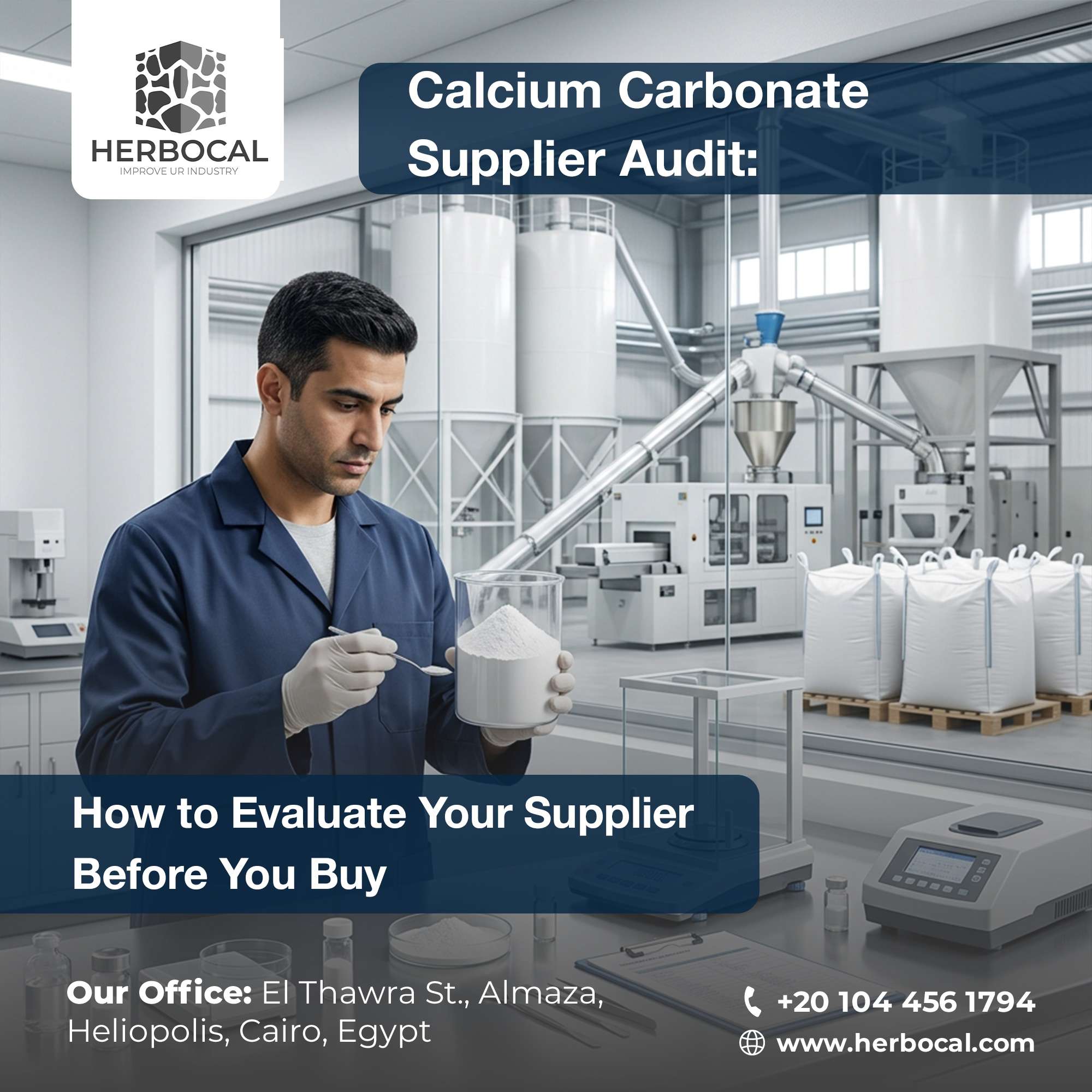
]Long-Term Supplier Relationships can make a significant difference in the way manufacturers manage procurement, production, and growth.
For companies operating in GCC markets, sourcing industrial raw materials is not simply about finding a supplier, placing an order, and waiting for delivery.
Manufacturers need consistency.
They need reliable quality, predictable supply, clear communication, competitive commercial terms, and a supplier that understands how their business operates.
This becomes even more important when the material is an essential part of the production process.
For manufacturers using calcium carbonate in plastics, PVC, paints, coatings, paper, rubber, construction materials, adhesives, and other applications, changing suppliers frequently can create unnecessary uncertainty.
At HERBOCAL, we believe that the strongest supplier relationships are built over time through consistency, transparency, communication, and a clear understanding of customer requirements.
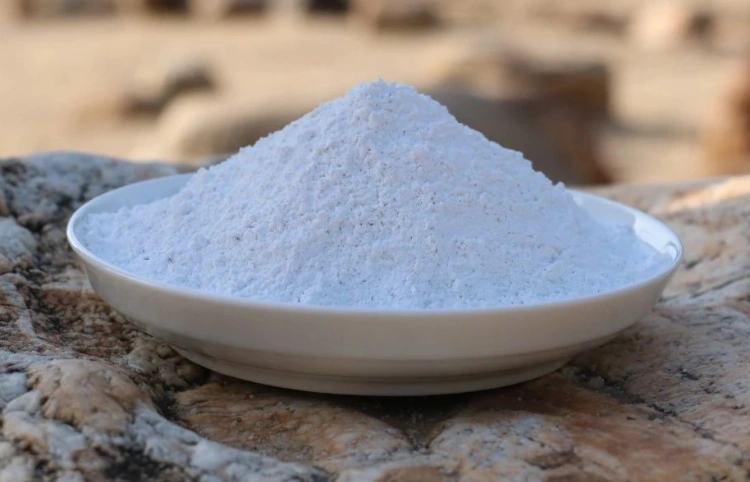
Long-Term Supplier Relationships: How GCC Buyers Can Build Stronger Partnerships
Why Long-Term Supplier Relationships Matter
A supplier can provide a product without necessarily becoming a valuable business partner.
There is a difference.
A transactional relationship focuses mainly on individual orders:
Price → Order → Shipment → Payment
A long-term relationship looks at the bigger picture:
Quality → Planning → Communication → Supply Stability → Continuous Improvement
This difference becomes especially important for manufacturers purchasing raw materials regularly.
When a supplier understands the buyer’s production requirements, expected volumes, technical specifications, and delivery schedule, both sides can plan more effectively.
The result can be a smoother procurement process and fewer unexpected problems.
Price Is Important, But It Is Not Everything
Price will always matter in industrial procurement.
However, choosing a supplier based only on the lowest quotation can create problems later.
Imagine finding a supplier that offers calcium carbonate at a slightly lower price.
But then:
- Product specifications vary.
- Shipments arrive late.
- Communication is slow.
- Technical questions take too long to resolve.
- Packaging does not meet expectations.
- Supply becomes unpredictable.
The initial saving may quickly disappear.
This is why experienced procurement teams increasingly look at total supplier value rather than price alone.
A reliable supplier that consistently meets requirements can create more value over time than a supplier that simply offers the cheapest quotation.
Consistent Quality Builds Trust
For industrial manufacturers, consistency is one of the most important qualities a supplier can provide.
Calcium carbonate is used in many production processes, and different applications may require specific characteristics.
These can include:
- Particle size
- Brightness
- Purity
- Moisture
- Coating
- Dispersion properties
- Chemical composition
If these characteristics change unexpectedly between shipments, manufacturers may need to adjust their production processes.
That can affect efficiency and final product quality.
HERBOCAL places strong emphasis on quality control throughout its production process, with testing and monitoring of important product characteristics. The company offers different calcium carbonate grades designed for a variety of industrial applications. (herbocal.com)
When quality remains consistent, buyers can develop confidence in the material and plan their production with greater certainty.
Communication Is the Foundation of a Strong Partnership
Good supplier relationships are built on communication.
This sounds simple, but it becomes extremely important when dealing with international procurement.
A GCC manufacturer may need to communicate with its supplier about:
- Product specifications
- Order quantities
- Packaging requirements
- Shipment schedules
- Documentation
- Delivery destinations
- Forecasted demand
- Quality requirements
If communication is unclear or slow, even a high-quality product can become difficult to manage.
A strong supplier should therefore do more than answer questions.
It should understand the buyer’s requirements and communicate proactively when something changes.
For example, if production schedules change or a shipment needs to be adjusted, early communication gives both sides more time to find a solution.
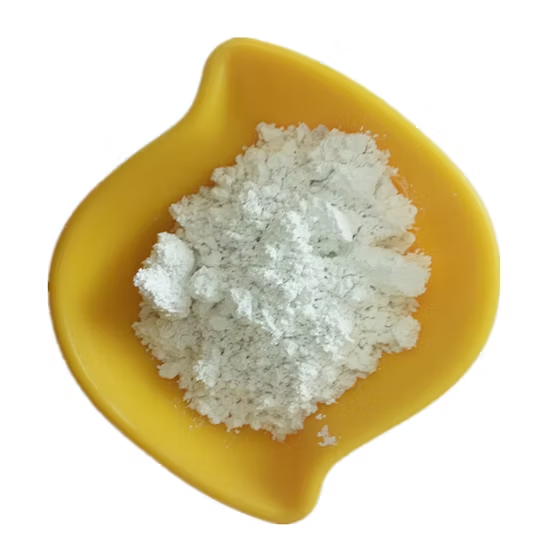
Long-Term Supplier Relationships: How GCC Buyers Can Build Stronger Partnerships
Understanding Your Customer’s Industry Matters
Not every calcium carbonate buyer has the same production requirements. A plastics manufacturer may need different specifications from a paint producer, while a paper manufacturer or construction-material producer may prioritize completely different properties.
This is why building Long-Term Supplier Relationships starts with understanding how the customer actually uses the material. A reliable calcium carbonate supplier should look beyond the product itself and understand the technical requirements of the customer’s manufacturing process.
At HERBOCAL, calcium carbonate solutions are supplied for a wide range of industrial applications, including plastics and PVC, paints and coatings, paper, rubber, construction materials, adhesives, ceramics, and other manufacturing sectors.
Understanding the customer’s application allows procurement discussions to move beyond:
“How much does one ton cost?”
Instead, the focus can shift toward more valuable questions such as:
“Which calcium carbonate grade will deliver the best performance in your production process?”
This application-focused approach is one of the foundations of successful Long-Term Supplier Relationships. Over time, the supplier becomes more familiar with the customer’s technical requirements, production challenges, and purchasing patterns, creating a relationship based on knowledge rather than price alone.
Long-Term Supplier Relationships Improve Demand Planning
One of the most important advantages of Long-Term Supplier Relationships is improved demand forecasting.
A manufacturer may know that its calcium carbonate consumption is expected to increase over the next six months because of higher production volumes or new customer orders.
Instead of waiting until inventory becomes critically low, the procurement team can share this information with its supplier in advance.
The supplier can then prepare production capacity, raw materials, packaging, and shipment schedules more effectively.
This creates value for both sides.
The buyer gains greater visibility over future supply.
The supplier gains a clearer understanding of upcoming demand.
As a result, the entire supply chain becomes easier to coordinate and less dependent on last-minute purchasing decisions.
This is particularly valuable for large GCC manufacturers with regular or growing calcium carbonate requirements.
Forecasting Can Reduce Last-Minute Procurement
Last-minute purchasing can create unnecessary pressure for industrial buyers.
When a manufacturer suddenly needs additional calcium carbonate, its available options may become limited. The company may have to accept:
- A higher purchase price
- A less convenient shipment schedule
- Higher transportation costs
- A different product grade
- Longer delivery times
Strong Long-Term Supplier Relationships can significantly reduce this pressure.
When buyers regularly share demand forecasts with their suppliers, both parties have more time to prepare production and logistics plans.
The objective is not necessarily to guarantee a fixed price indefinitely.
Instead, the goal is to create better supply visibility.
Better visibility allows manufacturers to plan inventory more accurately, avoid unnecessary emergency purchases, and make more informed procurement decisions.
Long-Term Partnerships Can Improve Procurement Efficiency
Changing suppliers is rarely as simple as comparing two prices.
A procurement team may need to:
- Search for alternative suppliers.
- Request product samples.
- Review technical specifications.
- Conduct laboratory testing.
- Negotiate commercial terms.
- Review quality and export documentation.
- Complete supplier approval procedures.
- Place trial orders.
- Monitor product consistency.
- Establish a new logistics process.
This process can consume significant time and internal resources.
When a supplier has already demonstrated consistent quality and reliable service, the procurement team can focus on improving the existing relationship rather than repeatedly starting from zero.
This does not mean manufacturers should never evaluate alternative suppliers.
Instead, it highlights the operational value of Long-Term Supplier Relationships. A proven supplier relationship can reduce administrative work, simplify communication, and make purchasing decisions more efficient.
Transparency Makes Problems Easier to Solve
No international supply chain is completely free from unexpected challenges.
Shipping delays, changes in demand, production issues, and market fluctuations can affect even well-established supply arrangements.
The difference often comes down to how the supplier responds.
A strong long-term partnership creates a foundation for transparent communication. When both sides already understand each other’s expectations, an unexpected problem can become a problem-solving discussion rather than an immediate commercial dispute.
For example, both parties can ask:
What happened?
What caused the issue?
What will be the expected impact?
What alternatives are available?
How can the issue be prevented in the future?
This collaborative approach is an important part of developing Long-Term Supplier Relationships that can withstand normal supply-chain challenges.
Technical Support Adds More Value
A strong industrial supplier should understand that customers sometimes need more than a product quotation.
A buyer may need guidance on whether a specific calcium carbonate grade is suitable for:
- PVC profiles
- Plastic masterbatch
- Paint formulations
- Industrial coatings
- Paper production
- Rubber compounds
- Adhesives
- Construction materials
The correct answer depends on the specific application, formulation, and required performance.
HERBOCAL offers different calcium carbonate grades and customized solutions designed around customer requirements.
This technical understanding can make Long-Term Supplier Relationships significantly more valuable.
As the supplier becomes more familiar with the customer’s production process, specifications, and challenges, communication becomes more efficient. At the same time, the buyer gains a clearer understanding of the supplier’s technical capabilities and product range.
The relationship gradually develops from a simple purchasing arrangement into a more informed industrial partnership.
Trust Is Built Through Consistency
Trust is not created by one successful shipment.
It is built through repeated performance over months and years.
A buyer becomes more confident when its calcium carbonate supplier consistently:
- Delivers the agreed product
- Maintains the required specifications
- Communicates clearly
- Meets agreed delivery schedules
- Provides accurate documentation
- Responds professionally
- Handles unexpected problems responsibly
These repeated experiences are what make Long-Term Supplier Relationships commercially valuable.
The real benefit is not simply familiarity.
It is confidence that the supplier can continue meeting the customer’s requirements as production evolves.
Over time, consistent performance creates commercial trust, which can become one of the strongest foundations of a successful industrial partnership.
Long-Term Partnerships Can Support Business Growth
A reliable supplier becomes even more valuable when a manufacturer begins to expand.
Imagine a company increasing its production by 20%, 30%, or more. Its calcium carbonate requirements may increase accordingly, creating additional pressure on procurement and supply planning.
With established Long-Term Supplier Relationships, scaling supply can become significantly easier.
The buyer does not need to explain its entire operation from the beginning. The supplier may already understand:
- The required product grade
- Typical order volumes
- Packaging preferences
- Delivery destination
- Quality expectations
- Purchasing frequency
- Forecasting patterns
This existing knowledge can make it easier to increase order volumes, plan future shipments, and respond to changes in production demand.
For growing manufacturers, the value of a long-term supplier is therefore not limited to today’s order.
It is the ability to build a more predictable supply system that can support tomorrow’s production requirements as well.
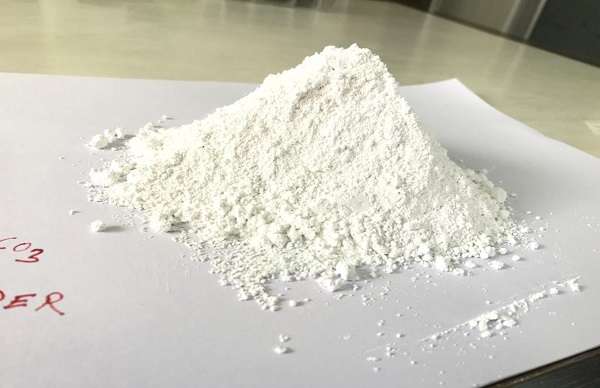
Long-Term Supplier Relationships: How GCC Buyers Can Build Stronger Partnerships
Why Supplier Location Matters
For international buyers, geography is another important part of the supplier relationship.
HERBOCAL is located in Minya, Egypt, close to limestone resources used in its calcium carbonate production.
The company also has access to Alexandria Port for international export operations. (herbocal.com)
This provides a direct connection between the production base and international markets.
For GCC buyers, working with an experienced regional exporter can simplify communication around production, shipment planning, documentation, and delivery requirements.
HERBOCAL’s Approach to Customer Relationships
At HERBOCAL, the goal is not simply to sell calcium carbonate.
The company aims to develop long-term relationships with customers by combining product quality with reliable service and an understanding of different industrial requirements.
HERBOCAL produces and supplies calcium carbonate solutions for international markets, including Ground Calcium Carbonate, coated calcium carbonate, micronized grades, and high-brightness solutions. (herbocal.com)
The company works with customers across multiple industries and international markets, including the Middle East, Africa, Europe, and Asia. (herbocal.com)
This international experience is important because every market can have different procurement expectations, shipping requirements, and technical specifications.
What GCC Buyers Should Look for in a Long-Term Supplier
Before establishing a long-term relationship with an industrial supplier, GCC procurement teams should evaluate several factors.
1. Product Consistency
Can the supplier maintain the agreed specifications from shipment to shipment?
2. Production Capacity
Can the supplier support your current and future volume requirements?
3. Technical Understanding
Does the supplier understand your application’s requirements?
4. Communication
Is the supplier responsive and transparent?
5. Logistics Experience
Can the supplier manage international shipments professionally?
6. Commercial Flexibility
Can the supplier work with realistic order quantities and delivery schedules?
7. Reliability
Does the supplier consistently deliver what was agreed?
8. Long-Term Mindset
Is the supplier interested in building a relationship rather than simply completing individual transactions?
These factors can help distinguish a long-term supply partner from a simple product vendor.
The Buyer Also Has a Role
A strong supplier relationship is not one-sided.
The buyer also needs to communicate clearly.
GCC manufacturers can strengthen their supplier relationships by:
- Sharing realistic demand forecasts.
- Providing accurate technical specifications.
- Communicating changes early.
- Giving clear feedback.
- Planning orders in advance.
- Paying according to agreed terms.
- Discussing problems openly.
- Evaluating performance fairly.
When both sides operate transparently, the relationship becomes much stronger.
Long-Term Does Not Mean No Competition
Building a long-term relationship does not mean a company should stop monitoring the market.
Professional procurement teams should continue to understand:
- Market prices
- Alternative suppliers
- New technologies
- Product developments
- Logistics conditions
- Changing customer requirements
The goal is not to become dependent on one supplier.
The goal is to have a trusted primary supplier while maintaining a clear understanding of the market.
This creates a healthier procurement strategy.
From Supplier to Strategic Partner
The strongest supplier relationships eventually move beyond the traditional buyer-seller model.
The supplier understands the customer’s business.
The customer understands the supplier’s capabilities.
Both sides communicate their future requirements.
Technical teams collaborate when necessary.
Procurement becomes more predictable.
And problems are addressed before they become major disruptions.
That is what turns a supplier into a strategic partner.
For manufacturers that depend heavily on calcium carbonate, this can create real value over the long term.
The Bottom Line
Building a long-term supplier relationship is not about signing one large contract and forgetting about the relationship.
It is about creating a system based on:
Quality + Communication + Reliability + Transparency + Planning + Trust
For GCC manufacturers, these factors can make international procurement significantly easier to manage.
A reliable supplier can help provide consistent raw materials, improve demand planning, reduce procurement uncertainty, and support production growth.
At HERBOCAL, we believe that every shipment should strengthen the relationship rather than simply complete an order.
From its production base in Minya, Egypt, to its international export operations, HERBOCAL focuses on supplying calcium carbonate solutions while building lasting relationships with industrial customers around the world. (herbocal.com)
If your company is looking for a calcium carbonate supplier that can support your requirements today and grow with your business tomorrow, HERBOCAL is ready to start the conversation.
Because the best supplier is not always the one offering the lowest price.
It is the one you can continue to rely on when your business grows, your requirements change, and your production cannot afford uncertainty.
Frequently Asked Questions
Why are long-term supplier relationships important for GCC manufacturers?
Long-term relationships can improve supply visibility, communication, quality consistency, procurement efficiency, and demand planning. They can also reduce the need to repeatedly qualify new suppliers.
Should GCC manufacturers choose a supplier based only on price?
No. Price is important, but manufacturers should also evaluate quality, reliability, technical support, logistics, communication, production capacity, and total procurement value.
Can a long-term supplier relationship reduce procurement costs?
It can improve procurement efficiency and planning, although savings depend on the specific commercial agreement and market conditions. Better forecasting and fewer emergency purchases can also contribute to cost control.
What should manufacturers consider when choosing a calcium carbonate supplier?
Important factors include product quality, consistency, technical specifications, production capacity, logistics capabilities, communication, export experience, and the supplier’s ability to support future demand.
Does HERBOCAL serve GCC customers?
HERBOCAL serves international markets, including customers and distributors across the Middle East, as well as other global regions. (herbocal.com)
Can HERBOCAL provide customized calcium carbonate solutions?
Yes. HERBOCAL offers different calcium carbonate grades and customized solutions according to specific industrial and application requirements. (herbocal.com)
Where is HERBOCAL located?
HERBOCAL is based in Minya, Egypt, near important limestone resources, with access to Alexandria Port for international export operations. (herbocal.com)