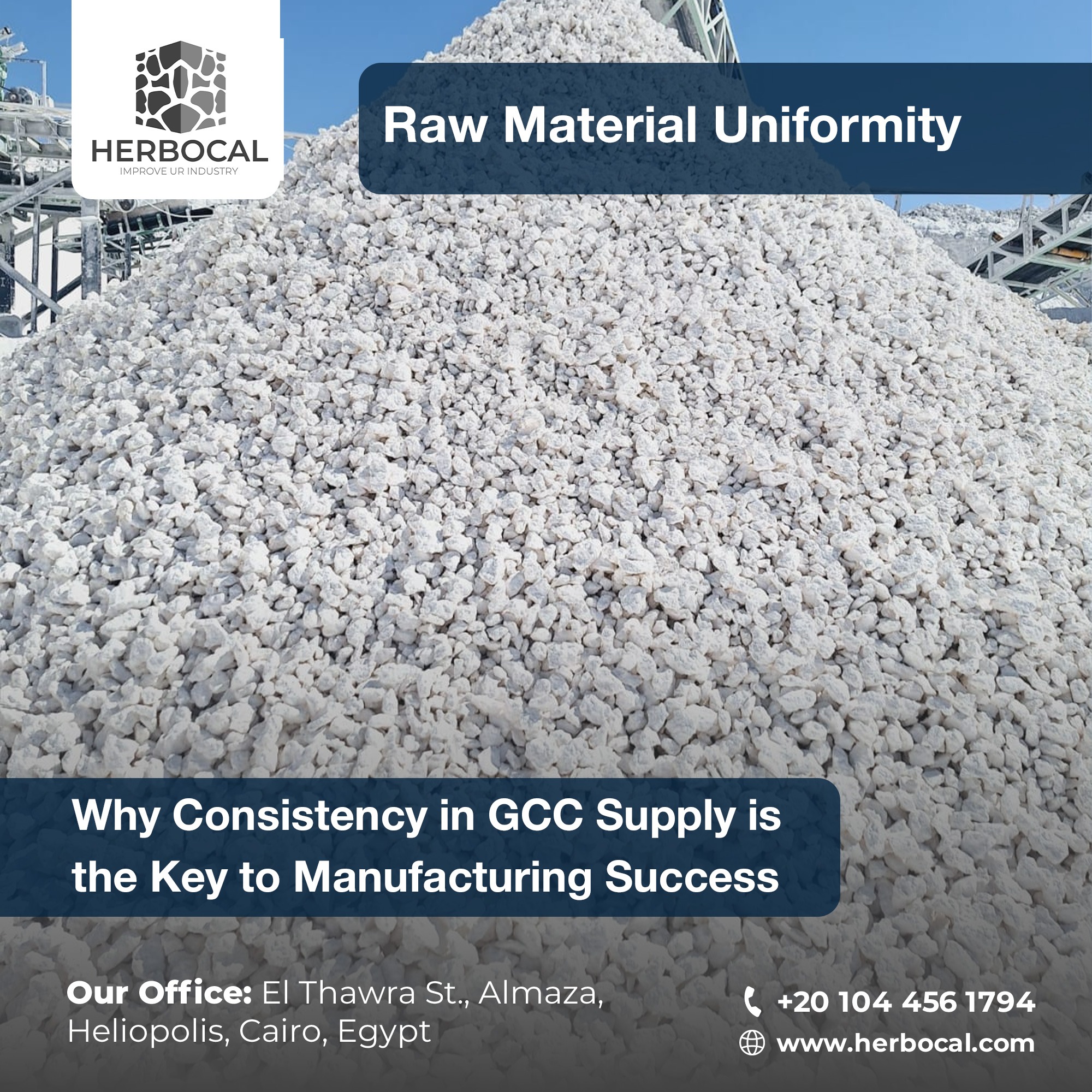
Rubber Grade Calcium Carbonate is the critical boundary between a high-performance elastomer and a low-quality rubber compound that fails under stress. In today’s global rubber manufacturing landscape, producers across industries—from heavy-duty conveyor belts and automotive components to footwear and industrial seals—are under constant pressure to balance performance with cost efficiency.
The challenge is not simply to produce rubber. It is to engineer compounds that deliver durability, flexibility, and strength while maintaining competitive production costs.
For rubber chemists and production managers, this balancing act is becoming increasingly complex. The rising costs of synthetic rubber polymers, plasticizers, and processing oils are forcing manufacturers to rethink their formulations. At the same time, performance expectations continue to rise.
This is where the role of fillers has evolved dramatically. No longer just cost reducers, advanced fillers have become essential tools in performance engineering.
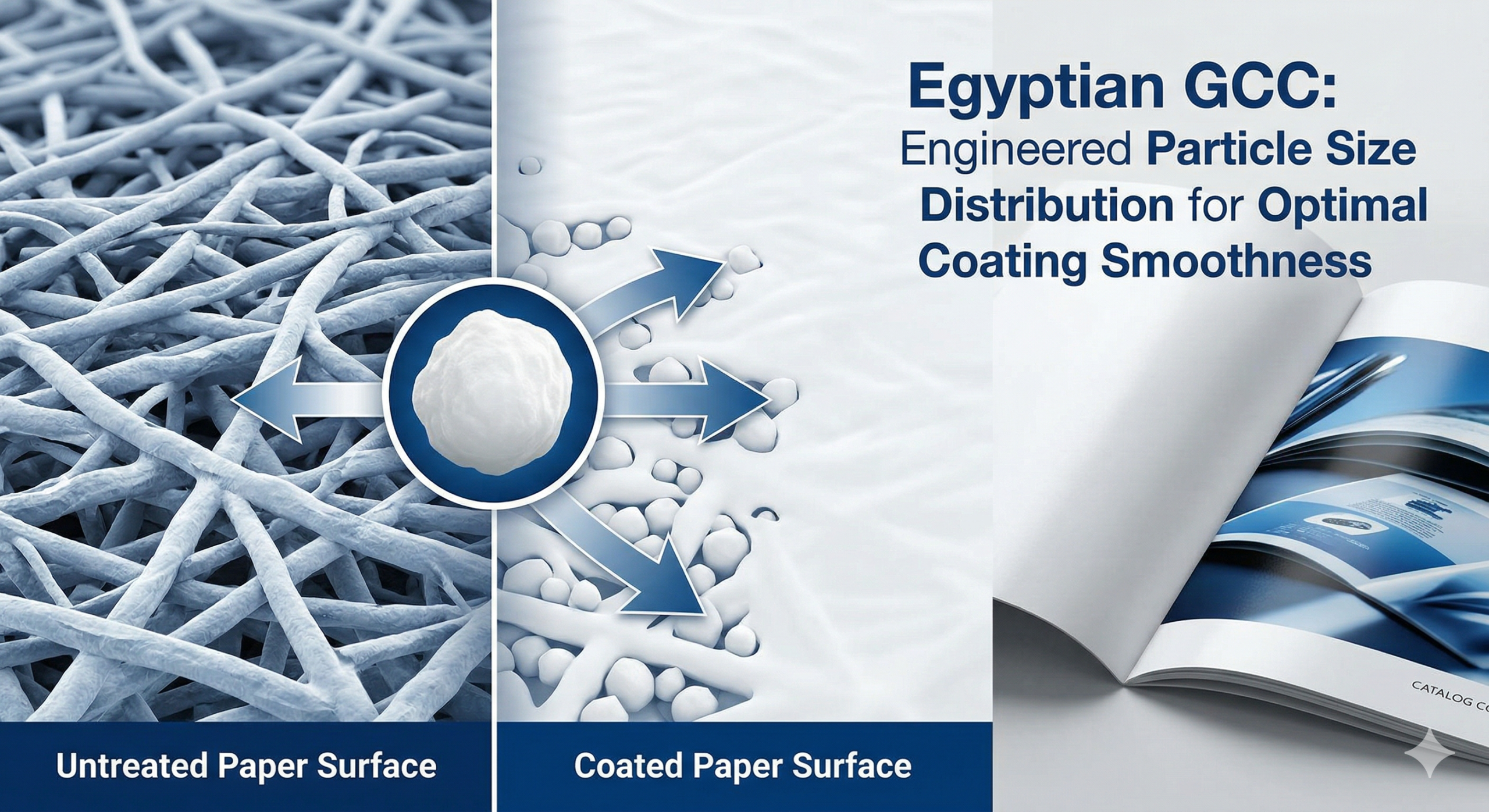
Rubber Grade Calcium Carbonate: HERBOCAL’s Tailored GCC Solutions for Manufacturers Worldwide
The Industry Shift: From Generic Fillers to Engineered Solutions
Traditionally, many manufacturers relied on generic calcium carbonate or low-cost mineral fillers sourced from local quarries. While these materials offered initial cost savings, they often introduced serious technical challenges.
Today, leading rubber manufacturers are moving away from commodity fillers and adopting highly engineered Rubber Grade Calcium Carbonate designed specifically for compounding applications.
This shift is driven by the need for:
- Better processability
- Improved mechanical properties
- Lower overall formulation costs
- Protection of expensive production equipment
Premium materials, particularly those sourced and processed in Egypt, are now setting new standards in the global rubber industry.
1. Oil Absorption Control: Reducing Hidden Production Costs
One of the most critical and often overlooked factors in rubber compounding is oil absorption.
Processing oils and plasticizers—such as DOP, naphthenic oils, and paraffinic oils—are among the most expensive components in a rubber formulation. Their role is essential: they improve flexibility, enhance processability, and reduce compound viscosity.
However, not all fillers interact with these oils in the same way.
Low-quality fillers, especially those with irregular particle shapes or high porosity, tend to absorb large quantities of oil. This creates a significant problem inside the mixing process.
The Problem:
- The filler behaves like a sponge
- Oils are absorbed instead of lubricating the polymer
- The compound becomes dry, stiff, and difficult to process
To compensate, chemists are forced to add more oil—dramatically increasing formulation costs.
High-quality Rubber Grade Calcium Carbonate, particularly from premium limestone sources, offers a fundamentally different behavior.
With its controlled crystalline structure and low surface area, it exhibits extremely low oil absorption.
Key Benefits:
- Reduced consumption of expensive processing oils
- Improved compound consistency
- Lower overall cost per kilogram
- Higher filler loading without compromising flexibility
This transforms the filler from a cost burden into a cost optimization tool.
2. Eliminating Abrasive Contaminants: Protecting Equipment Investment
Rubber processing is an intensive mechanical operation involving high shear forces, high temperatures, and continuous production cycles. Equipment such as internal mixers, extrusion dies, and molds represents a major capital investment.
One of the hidden threats in rubber compounding is abrasive contamination.
Low-grade mineral fillers often contain impurities such as:
- Silica (sand particles)
- Metallic traces
- Hard mineral fragments
These contaminants can have devastating effects on production equipment.
Consequences of Abrasion:
- Accelerated wear of mixer rotors
- Damage to extrusion dies and molds
- Increased maintenance frequency
- Unexpected downtime and production losses
High-purity Calcium Carbonate eliminates this risk.
Engineered Rubber Grade Calcium Carbonate produced from high-quality limestone deposits offers:
- Purity levels exceeding 99% CaCO₃
- Minimal abrasive contaminants
- Naturally low hardness
Operational Advantages:
- Extended equipment lifespan
- Reduced maintenance costs
- Improved production reliability
- Lower total cost of ownership
Protecting equipment is not just about maintenance—it is about ensuring uninterrupted productivity.

Rubber Grade Calcium Carbonate: HERBOCAL’s Tailored GCC Solutions for Manufacturers Worldwide
3. Dispersion Technology: The Foundation of Mechanical Strength
The effectiveness of any filler depends on how well it disperses within the rubber matrix.
Poor dispersion leads to agglomeration, where particles cluster together instead of distributing evenly. These clusters become weak points in the material.
Under stress, these Weaknesses lead to:
- Reduced tensile strength
- Lower elongation at break
- Poor tear resistance
- Premature product failure
Advanced Rubber Grade Calcium Carbonate addresses this challenge through precise particle engineering.
Micronized Particle Control
Using advanced processing techniques, particles are milled to ultrafine sizes with tightly controlled Particle Size Distribution (PSD). Oversized particles are eliminated to ensure uniformity.
Surface Treatment Technology
For demanding applications, the material can be surface-treated with agents such as stearic acid. This enhances compatibility between the inorganic mineral and the organic polymer matrix.
Performance Results:
- Rapid and uniform dispersion
- Stronger polymer-filler interaction
- Improved mechanical properties
- Consistent product quality
Additionally, better dispersion leads to faster mixing cycles, increasing plant productivity and throughput.
4. Processing Efficiency: Faster Mixing, Higher Output
In industrial rubber production, time is a critical factor. Every minute saved in mixing and processing translates into increased production capacity and reduced operational costs.
Low-quality fillers negatively impact processing efficiency by:
- Increasing compound viscosity
- Extending mixing times
- Requiring higher energy input
Engineered Rubber Grade Calcium Carbonate improves processing behavior significantly.
Efficiency Gains:
- Reduced mixing time
- Lower energy consumption
- Improved flow during extrusion and molding
- Enhanced surface finish of final products
These improvements allow manufacturers to produce more batches per shift without additional investment in equipment.
5. Global Logistics Advantage: Reliable Supply at Scale
In addition to technical performance, supply chain reliability is a key factor in raw material sourcing.
Rubber manufacturers operating at scale require:
- Consistent quality
- Large-volume supply
- Reliable delivery schedules
Egypt’s strategic geographic location provides a significant advantage. Positioned at the intersection of major global shipping routes, it enables efficient distribution to Europe, Asia, and the Americas.
Logistics Benefits:
- Shorter transit times
- Competitive freight costs
- Stable export infrastructure
Packaging is equally critical. High-quality Rubber Grade Calcium Carbonate is delivered in:
- Moisture-resistant jumbo bags
- Secure palletized shipments
- Customized packaging solutions
This ensures the material arrives dry, free-flowing, and ready for immediate use in production.

Rubber Grade Calcium Carbonate: HERBOCAL’s Tailored GCC Solutions for Manufacturers Worldwide
Conclusion: Smarter Compounding for a Competitive Industry
The global rubber industry is evolving rapidly, and manufacturers can no longer rely on outdated approaches to compounding.
Generic fillers may offer short-term cost savings, but they often lead to:
- Higher oil consumption
- Equipment damage
- Poor product performance
- Increased long-term costs
Rubber Grade Calcium Carbonate represents a smarter, more strategic approach.
By combining:
- High chemical purity
- Controlled particle size distribution
- Low oil absorption
- Excellent dispersion characteristics
It transforms from a simple filler into a powerful formulation tool.
Manufacturers who adopt engineered mineral solutions gain a clear competitive advantage:
- Lower production costs
- Improved mechanical performance
- Greater operational efficiency
- Enhanced product reliability
If you are ready to optimize your rubber formulations, reduce costs, and improve performance, now is the time to upgrade your filler strategy.
Connect with the HERBOCAL Polymer Technology & Global Export Team today to discover how advanced Rubber Grade Calcium Carbonate can elevate your production process and deliver measurable results.